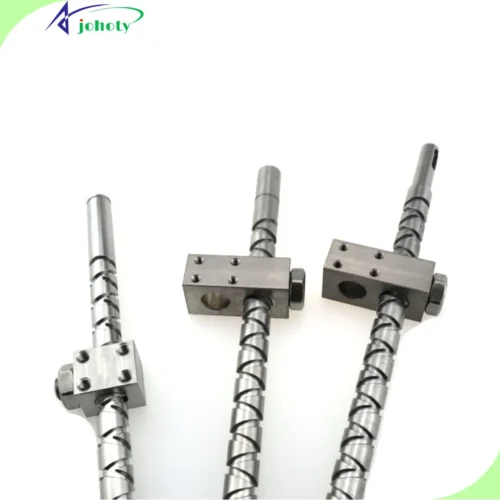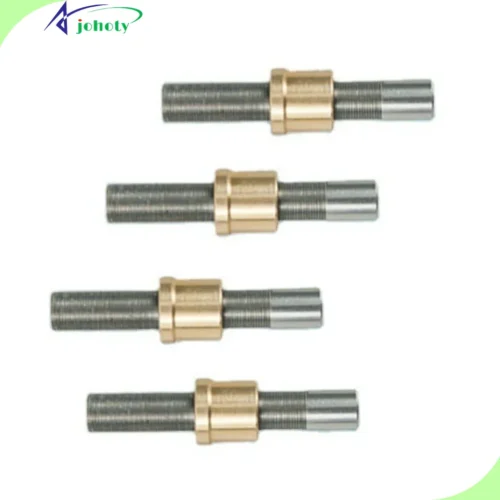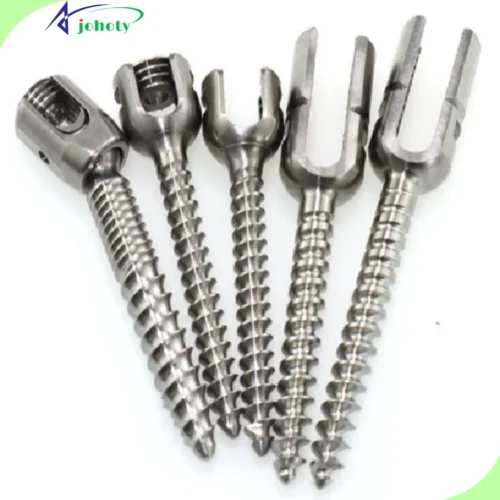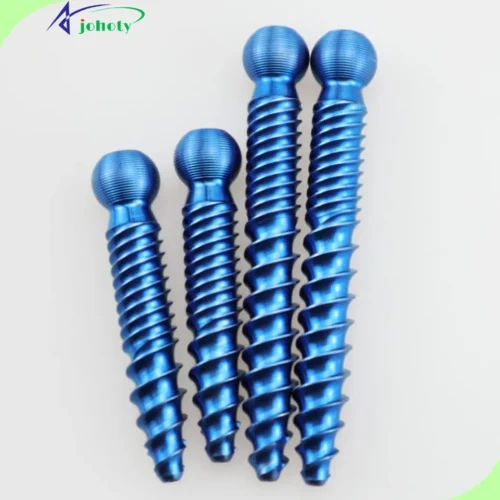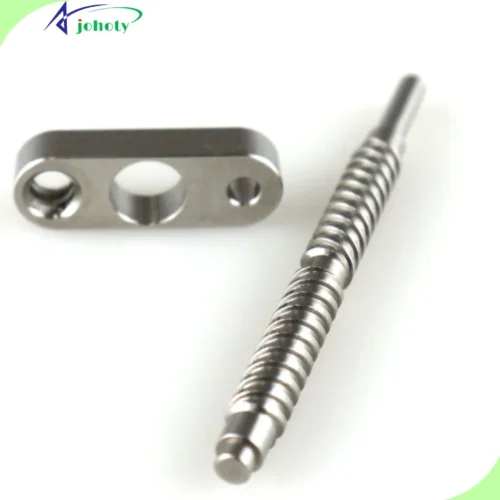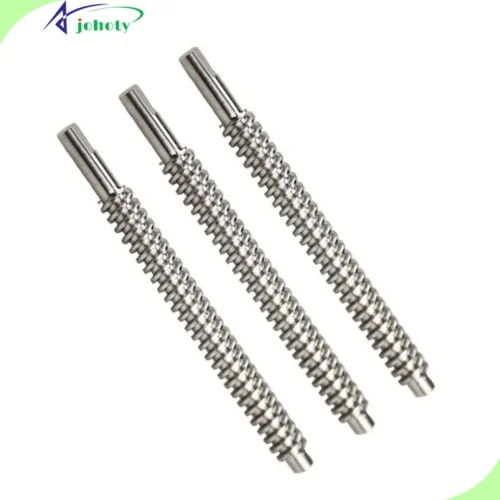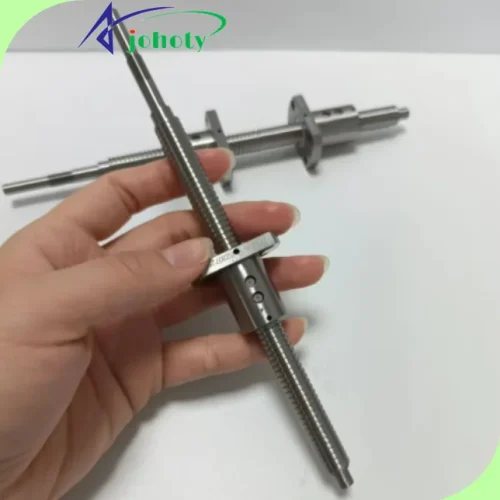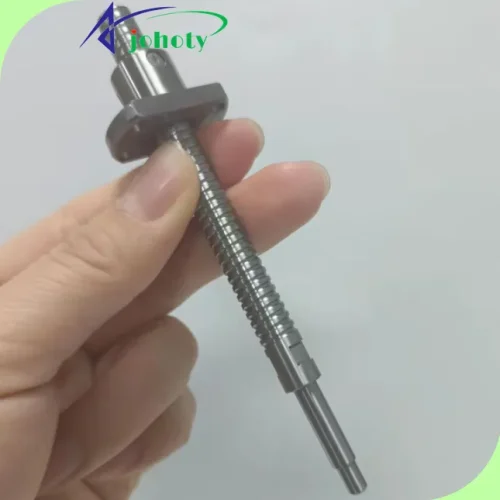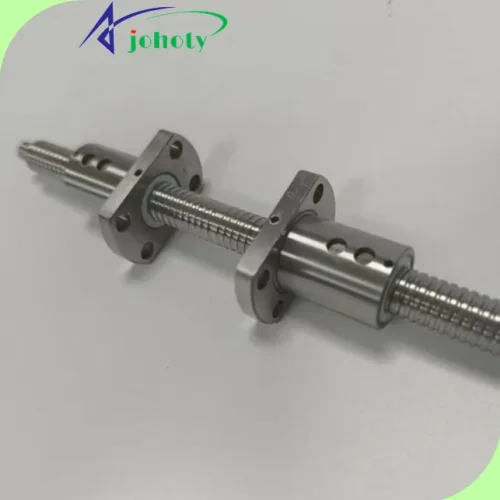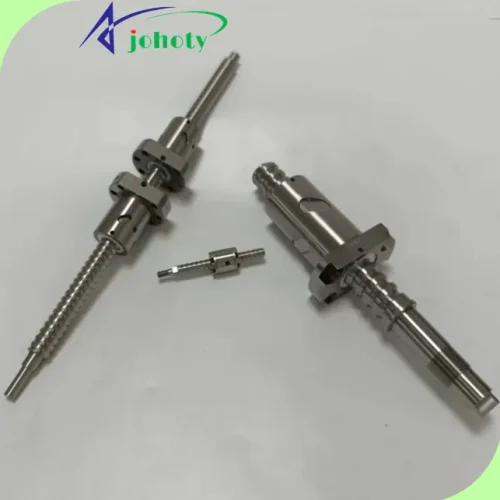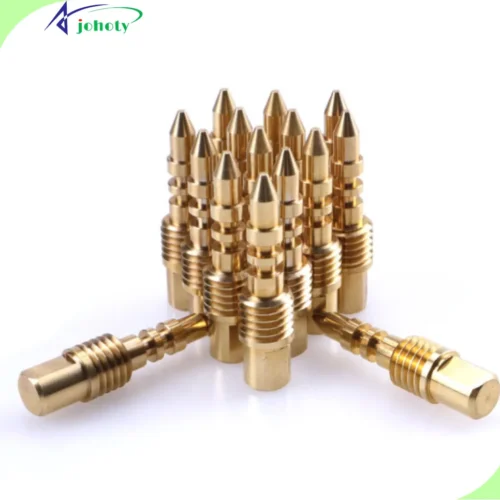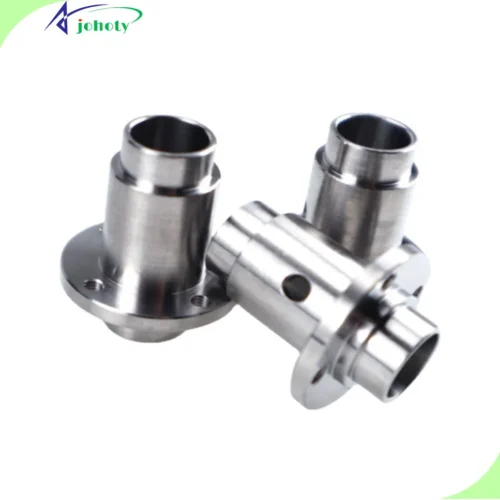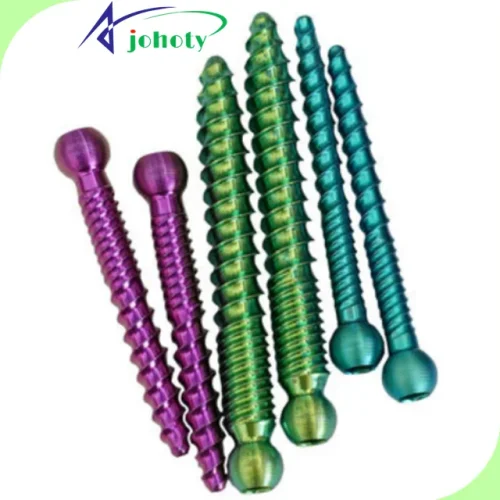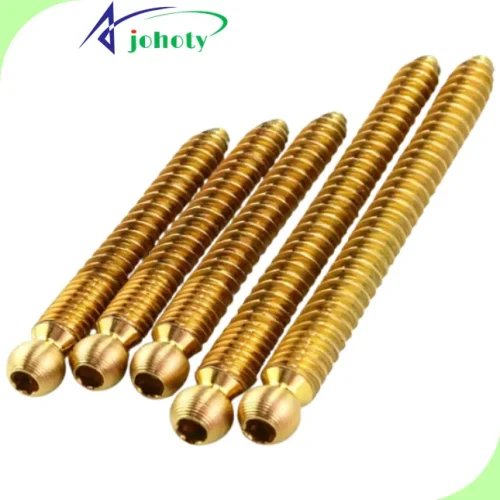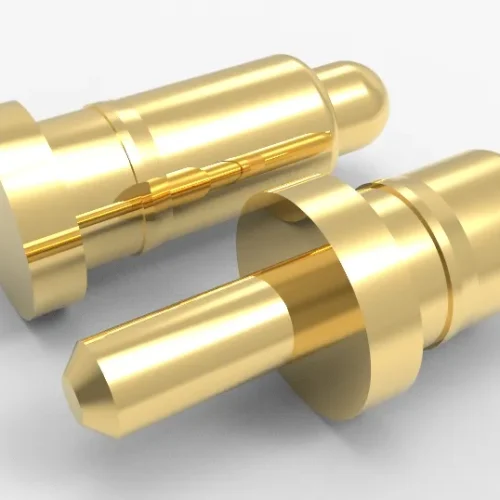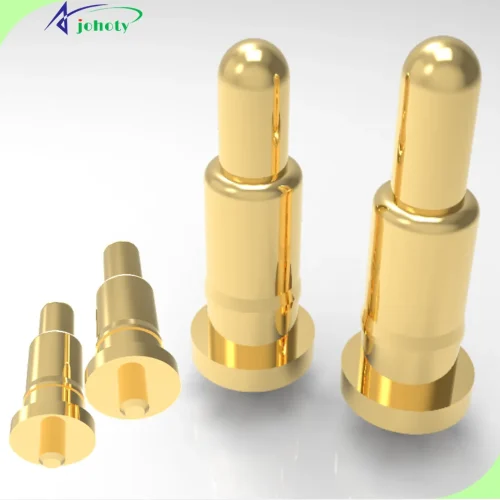


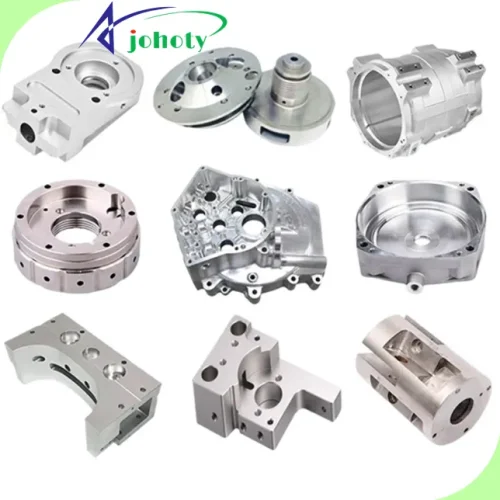
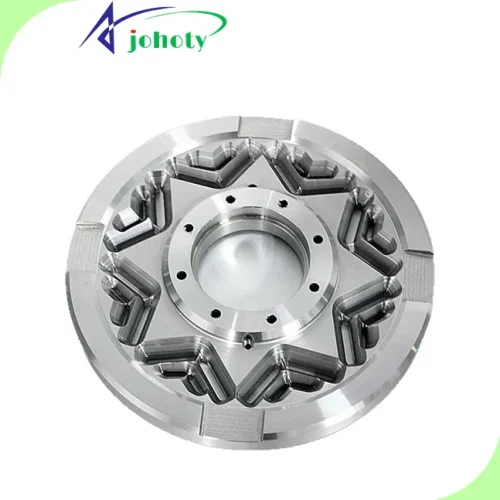
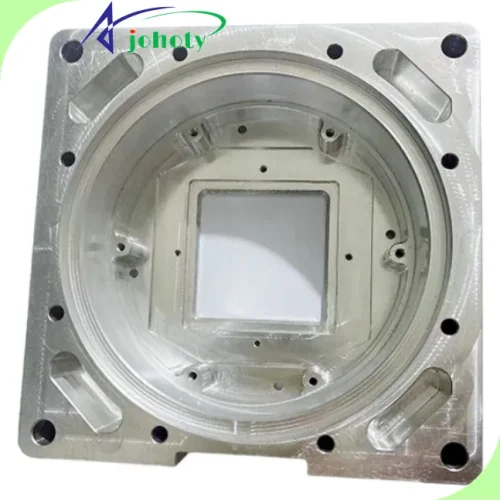
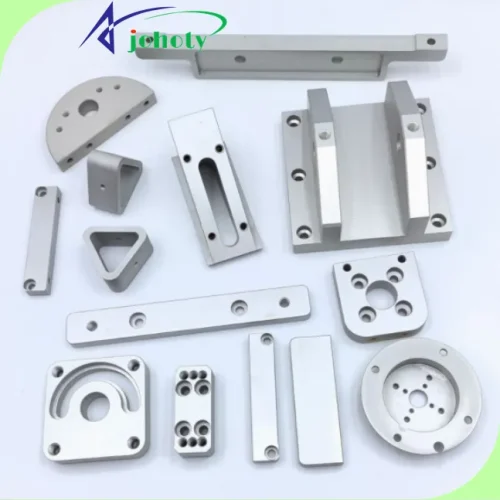
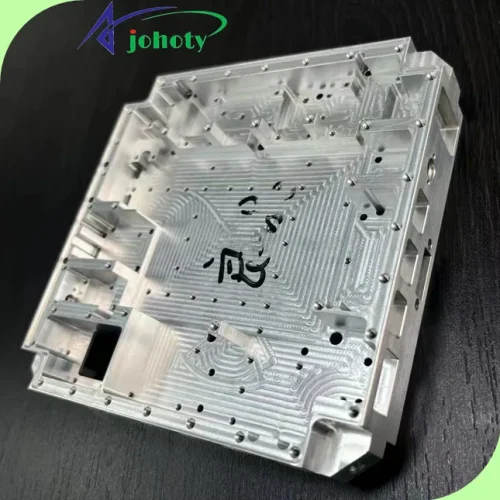
Description of CNC milling services and parts:
Mechanical specifications:
Material: Aluminum 6061/6082/7075, Stainless Steel 303/304/316/631/17-4PH, Tool Steel, Copper/Brass, Titanium Alloy. Engineering plastics (POM, PEEK, PC, PA, PTFE, etc.).
Size range: from <5.00 mm to approximately 1,000 × 600 × 500mm structural components.
Processing accuracy: Conventional ±0.01-0.02 mm, high accuracy can reach ±0.007~±0.005mm (depending on the structure/material/inspection plan).
Surface roughness: milled Ra 3.2-1.6 μm, can be polished to Ra 0.8-0.2μm through precision machining/grinding.
Feature capability: Thin wall ≥0.3-0.5mm, micro hole ≥Ø0.5mm, deep cavity/narrow groove, high slope 3D free-form surface. 4/5-axis multi face machining with one-time clamping.
Surface treatment (finishing): Johoty provides standard sulfuric acid/hard/chromic acid anodizing. Chemical nickel plating, hard chromium/zinc/nickel plating, stainless steel/aluminum alloy passivation/aluminum alloy conductive oxidation/steel phosphating. PVD/powder/PTFE coating, sandblasting/mechanical polishing/mirror processing/wire drawing/vibration grinding/magnetic grinding.
Functional applications, key performance, adaptability of CNC milling services and parts:
Typical applications: high-end electronic casings, heat dissipation substrates and cold plates, RF/5G module sockets. Motion control parts, gearboxes/bearing seats, robots and automation components. Fixtures and testing fixtures, small batch prototypes, and engineering validation parts.
Key performance:
- High consistency and repeatability of multiple mating parts.
- Control the deformation and accuracy of long, thin-walled, and complex multi-faceted components.
- Control the reference surface/reference hole for subsequent processes such as grinding, electroplating, anodizing, and spraying.
Compatibility:
- Supports mainstream CAD data: STEP/IGES/DWG/DFF.
- Familiar with metric/imperial threads, locating pins, bearing seats, oil seal grooves, and linear guides.
- Control flatness, parallelism, coaxiality, and positional accuracy according to GD&T requirements. Suitable for loading high-precision automation, semiconductor, medical, and optical instruments.
Johoty’s values on CNC milling services and parts:
Can understand you: engineers communicate with you. Advance DFM/DFS: wall thickness, tool accessibility, clamping and deformation risks, assembly benchmarks, to reduce trial and error costs.
True flexible customization: Proficient in high mix small batch, from single piece validation to multi batch engineering parts. Including unconventional structures, hidden features, and non-standard interfaces.
Traceable quality: Complete process and testing records to meet your quality system requirements. Provide dimension reports, material/heat treatment/surface treatment certificates.
Suitable for confidential projects: strict drawing and sample confidentiality process, applicable to new products, patented structures, and sensitive projects that have not yet been made public.
Made in China + Engineering Thinking: Scalable Capacity + Stable Delivery Time + Controlled Costs. Suitable as a long-term CNC milling services and precision parts and service base for your engineering team.
Catalogs of CNC milling services and parts:
Challengs and Solutions of CNC milling services and parts:
Extreme dimensional tolerances & manufacturability of complex geometries (DFM):
Engineer’s Challenges:
- Can we achieve a stable tolerance of ± 0.005-0.01mm?
- Can deep cavities, thin walls, small chamfers, irregular surfaces, and mixed geometry planes+free-form surfaces really be produced and mass-produced?
- GD&T positional tolerance annotation is complex, can Johoty understand and calculate it accurately?
Johoty’s solutions:
Direct quantification of tolerance and capability range:
- Milling size capability: The tolerance of conventional CNC parts can be controlled to ± 0.01mm, and key features can be evaluated to ± 0.005mm (depending on the material and structure).
- The annotation supports ISO 2768 and ASME Y14.5.
DFM Participation & Design Optimization:
- Participate in the manufacturability review in advance and suggest the direction of tool entry, fixture design, adjustment of meat thickness/rib position, and minimum R-angle.
- Clearly identify high-risk areas such as deep narrow grooves, extremely thin walls, and localized heat concentration, and provide executable design solutions.
Complex Geometry:
- Indicate the configuration of 3/4/5 axis equipment, capable of processing multi-faceted aviation brackets, medical shells, and robot joint seats that can be clamped at once.
- The parts containing cross oil lines, blind holes, and step cavities can ensure coaxiality and positional accuracy.
Multiple materials & strength, surface, lifespan, performance requirements:
Engineer’s Challenges:
- Can aviation materials such as aluminum alloy, mold steel, stainless steel, titanium alloy, engineering plastics, and composite materials be processed stably like 6061 aluminum and ordinary steel?
- Can the indicators of surface roughness, coating, anode, and hardening be strictly controlled?
- Is the performance consistent between small-scale trial production, pilot qualification testing, and mass production?
Johoty’s solutions:
Material coverage and data experience:
- Johoty can process 6061/7075 aluminum, 17-4PH/316L stainless steel, P20/S136 mold steel, Ti-6Al-4V titanium alloy, PEEK/PC/nylon, etc.
- Johoty has developed standard process cards for cutting parameters, tool selection, stress relief, and heat treatment processes for different materials.
Surface and finishing ability:
- The surface roughness is Ra 0.8-3.2µm, which can achieve Ra 0.2µm.
Implement post-treatment processes such as anodizing, hard anodizing, electroplating, sandblasting, blackening, nickel plating, chrome plating, and coating.
Performance and consistency control:
- For load-bearing/moving parts, Johoty can meet the design expectations of engineers through hardness testing, salt spray testing, fatigue or torque testing.
- Small batch samples and mass production use the same process route to ensure consistency in performance and size.
Quality traceability, document system & communication collaboration:
Engineer’s Challenges:
- How does Johoty ensure that the first/Nth batch sizes are the same?
- Is there a complete inspection report, material certification, and process traceability?
- How to efficiently collaborate with time difference, language, requirement changes, and design iterations?
Johoty’s solutions:
Quality System and Testing Capability:
- ISO 9001 guides CNC machining to achieve high precision and consistency in CNC milling services and parts.
- Coordinate measuring machines (CMM), height gauges, projectors, roughness gauges, and hardness testers can detect key features.
- FAI’s first article inspection report, dimensional full inspection report, and PPAP/CPK/SPC are often available for customers with automotive/bulk demand.
Traceability and Batch Management:
- Each batch of CNC milling services and parts has a unique batch number. Traceable to raw material furnace number, processing technology card, and inspection records.
- Important parts support barcode/QR code identification for storage and on-site tracking.
Communication and project management:
- Equipped with project engineers familiar with engineering English for coordination, supporting communication of GD&T, BOM, and process requirement notes according to drawings.
- For samples and NPI, milestone node management is adopted: drawing confirmation, DFM feedback, sample delivery time, and mass production ramp up plan.
- Use a fixed communication rhythm: weekly status update emails + real-time feedback on critical size issues to reduce cross time zone information delays.
Why Choose Johoty‘s CNC Milling Services and Parts?
Johoty’s CNC milling services and Parts have a ±0.001 precision, save >18% costs, ship in <2 weeks, flexible custom. Contact Johoty now!
Benefits of Johoty’s CNC Milling Services and Parts:

Materials Science and Complex Geometric Shapes:
Benefits brought by Johoty: providing manufacturing capabilities for collaborative optimization of difficult to machine titanium, Inconel, high-strength aluminum, complex cavities, thin walls, and deep holes. This type of processing is based on a deep understanding of material properties, heat treatment deformation control, and tool path dynamics. Translate design intent into reality.
Challenges solved: Engineers must choose specific high-performance materials when achieving lightweight, high-strength, or extreme environmental resistance, but the processability is extremely poor. When manufacturing complex geometric shapes, it is easy to cause tool damage, workpiece deformation, or surface integrity defects. Johoty overcomes the challenge of manufacturing compatibility between advanced materials and complex geometric shapes. Engineers do not have to sacrifice performance due to manufacturing constraints during design.

Based on dynamic tolerances and surface integrity:
Benefits brought by Johoty: surpassing static dimensional tolerances to ensure dynamic tolerance systems and functional surface integrity. Johoty understands and is able to control the surface texture, residual stress layer, and microstructure of key mating surfaces. CNC milling services and parts ensure stability and longevity during high-speed/load operation. They are not only available during static measurements.
Challenges solved: The failure of high-end equipment often stems from micro motion wear of mating surfaces, fatigue crack initiation, or stress corrosion. These are closely related to the surface integrity during the manufacturing process. Johoty solves the problem of converting static dimensional tolerances on drawings into dynamic performance reliability in work. Directly solve the gap from qualified drawings to reliable service.

Technology chain integration and rapid iteration verification:
Benefits brought by Johoty: providing integrated manufacturing from rapid prototyping of CNC milling services and parts to small batch production. Johoty has mature CNC milling, coordinate measurement, and 3D scanning inspection. High synergy of necessary shot peening, anodizing, and special coatings. Engineers can obtain a complete and responsive manufacturing laboratory.
Challenges solved: The R&D cycle pressure of high-end projects is enormous, and engineers are eager to accelerate the iterative cycle of design verification optimization. Johoty needs to address the performance differences between prototype and mass-produced parts due to supply chain or process differences. And the communication and time costs during the iteration process. The integrated chain provided by Johoty ensures consistency from the first item to the 10000th item. Shortened the verification cycle for each design modification you make.

Deep technical dialogue and data transparency:
Benefits brought by Johoty: establishing professional dialogues and full process data packages based on manufacturability design. This is Johoty’s engineering team’s ability to understand and even anticipate potential manufacturing risks in the design. Proactively provide optimization suggestions and key process data such as processing parameters, inspection reports, and heat treatment records.
Challenge to be solved: One concern of engineers is the technical black box and communication barriers. They need a processing unit to execute commands, and more importantly, they need partners who can engage in peer-to-peer technical exchanges and jointly solve problems. Johoty directly gives you a sense of technological control and risk visibility across geographical distances. You can manage the manufacturing process in China with precise technical control, just like managing local suppliers.
Applications of CNC milling Services and parts:
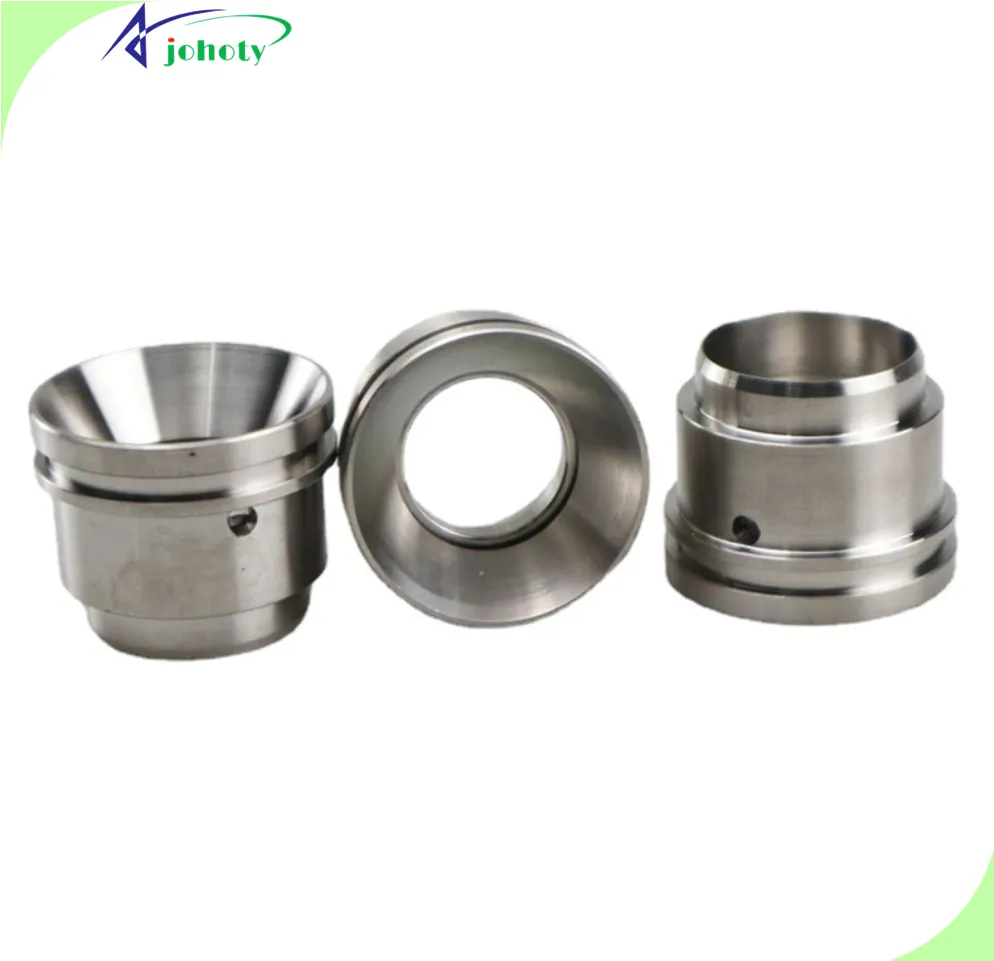
Thin-walled frames/brackets for aviation structural components:
Challenges: Large size thin wall, multiple reinforcement positions, multiple coordinates, easy to deform after multiple clamping, GD&T requirements are extremely strict.
Professional role: Johoty’s CNC milling services and parts can achieve stable clamping through multi axis linkage. Complete multi-faceted machining within the same coordinate system, controlling thin-walled rigidity and form position.
Customization: combination fixture + step-by-step stress relief rough and fine cutting path + online measurement program. Establish dedicated CNC milling services and parts for typical frame components, including process packages and tool libraries.
Solutions: Reduce clamping frequency and cutting stress concentration, and unify the reference plane and hole system. Ensure that the flatness and positional accuracy meet the standard in one processing.
Efficiency/Costs: Process consolidation, reduced rework rate, significantly shortened single piece cycle time and debugging time. The common double-digit percentage decrease in comprehensive single item cost.
Advantages: We have long-term practical data on tool paths, fixtures, and online measurements in the field of large-sized thin-walled parts. CNC milling services and parts can complete first article verification and batch stability faster.
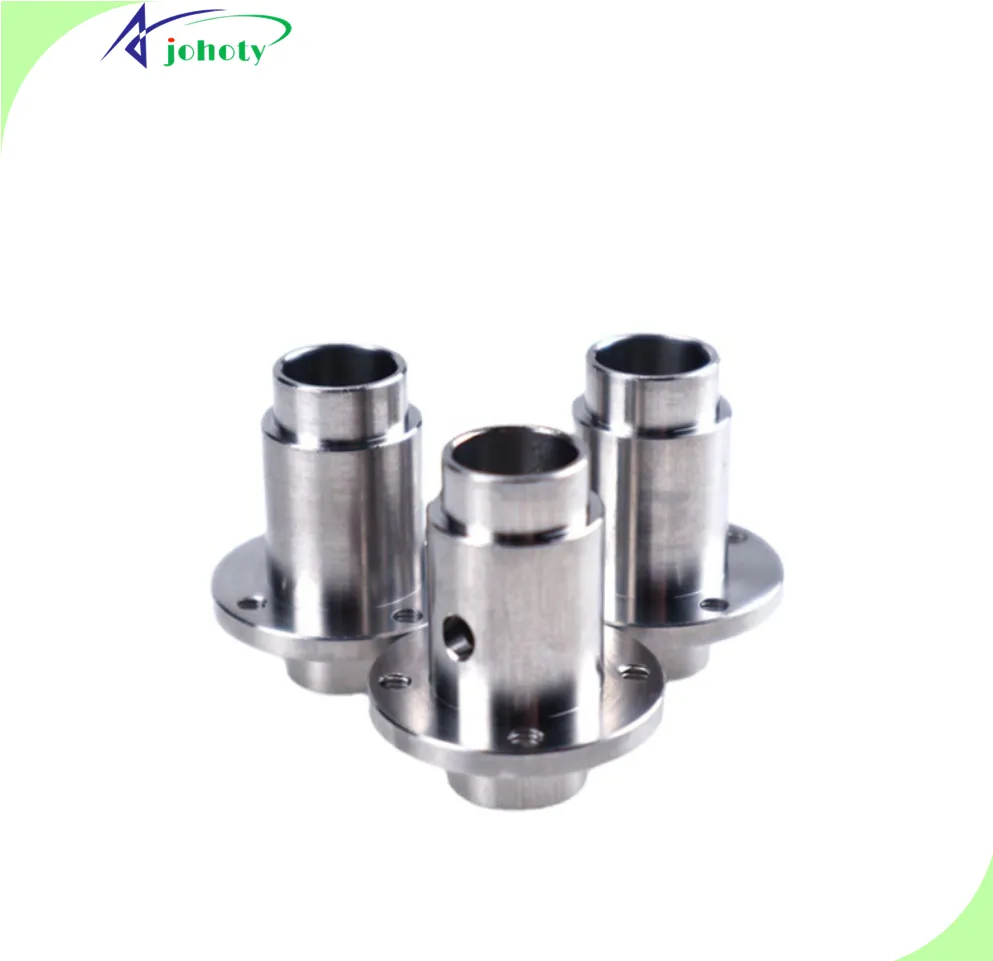
Medical implants & surgical instruments (titanium alloys, CoCr, etc.):
Challenges: Freeform surfaces, small R-angles, small chamfers, requiring mirror roughness and strict batch traceability. Any minor defects are unacceptable.
Professional role: Johoty’s CNC milling services and parts can precision machine organic surfaces in 5-axis linkage state. Simultaneously maintain stable control over dimensions, tolerances, and surface quality while retaining traceability data.
Customization: Multiple light cutting paths with small cutting tools, specialized deburring stations, and surface polishing processes. Coordinate CNC milling services and parts with serial number marking and process recording.
Solutions: Establish a fixed CAM template from the 3D model, lock the surface error zone and key dimensions. Ensure that the geometry and surface of implants from different batches are consistent.
Efficiency/Costs: After standardizing the program and fixtures, the programming and first article verification time is reduced, and the scrap rate is maintained at an extremely low level. Compliance verification and preclinical testing are more focused on the design itself.
Advantages: Clear processes in tool life management, batch consistency, and process recording. Medical engineers can transparently assess the process risks of CNC milling services and parts.
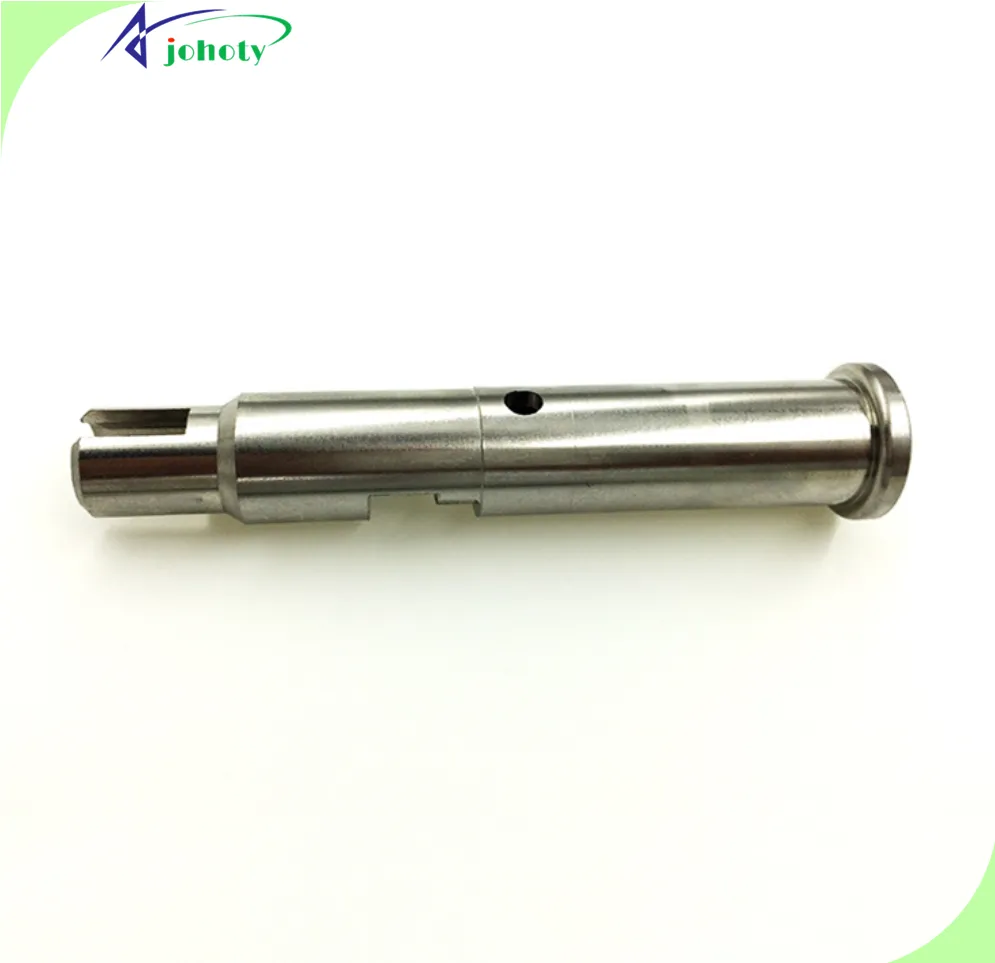
Semiconductor equipment vacuum chamber/precision bracket:
Challenges: Deep cavity, multiple steps, multiple O-ring grooves, requiring extremely low leakage and particle size. Aluminum/stainless steel integral parts are highly sensitive to burrs and debris.
Professional role: Johoty uses high-precision CNC milling services and parts to control the flatness of cavity sealing surfaces, sharp edges, burrs, and blind hole residues.
Customization: long handled cutting tools, core suction tool paths, vibration reducing fixtures, CNC milling services and parts with dedicated deburring and ultrasonic cleaning processes.
Solutions: Define separate precision cutting paths for sealing and mating surfaces in CAM. Perform 100% critical surface inspection after processing to reduce the risk of vacuum leakage.
Efficiency/Costs: Leakage caused by burrs and scratches has significantly decreased, and the baking and vacuuming debugging cycle of the entire machine has been shortened. On site repair and downtime costs are smaller and smaller.
Advantages: Prioritize particle control and cleanliness in the process design stage, rather than just cleaning afterwards. Semiconductor engineers are more likely to incorporate CNC milling services and parts into their overall particle control solutions.
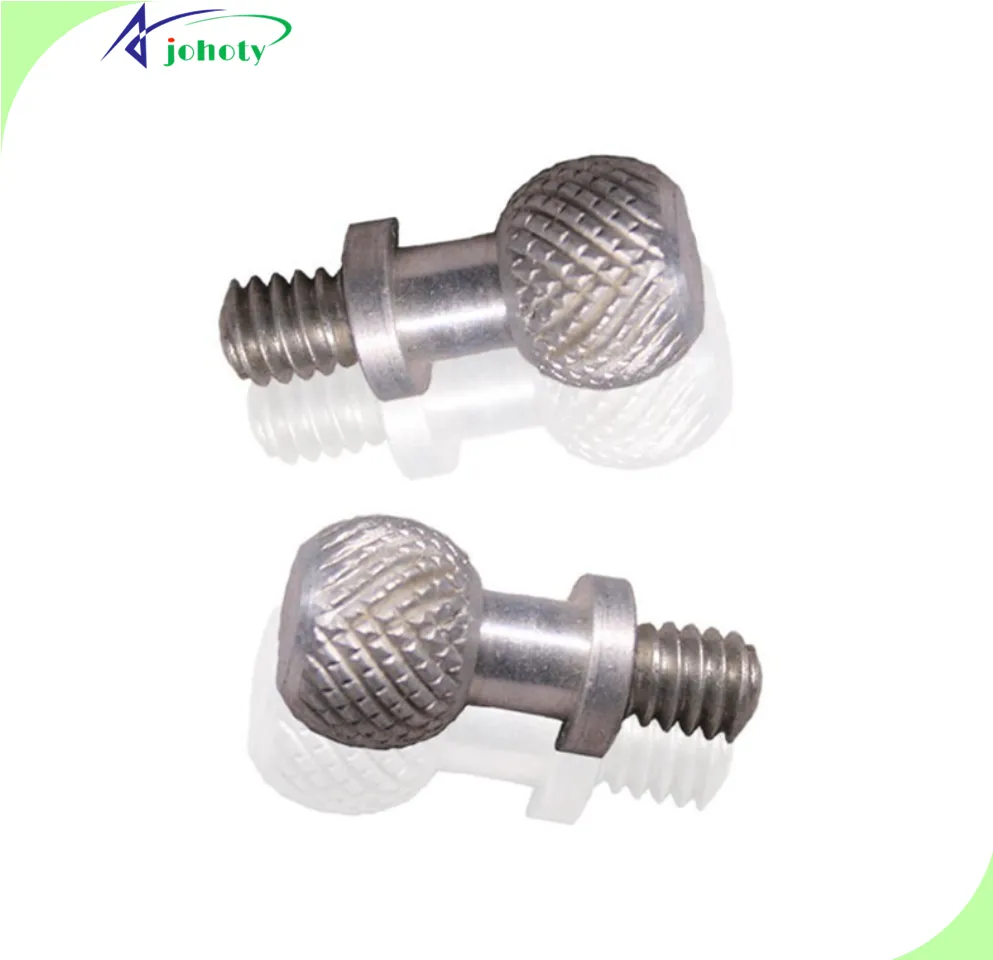
Industrial robot joint shell/end effector (EOAT):
Challenges: Coexistence of irregular thin-walled shells, internal cable trays, and multi reference installation surfaces. I need to balance rigidity, lightweight, and assembly accuracy.
Professional role: Johoty’s CNC milling services and parts reduce benchmark conversion errors through 5-axis multi face machining with one clamp. Ensure the coaxiality and perpendicularity of the installation surfaces of reducers, encoders, etc.
Customization: Design flexible fixtures for each type of shell, optimize allowance allocation and tool path based on deformation simulation results. Johoty’s CNC milling services and part is based on specialized shell processing technology.
Solutions: Control the direction and sequence of cutting force to avoid the displacement of thin walls and ensure that the shell maintains the design geometric accuracy in the assembled state.
Efficiency/Costs: Due to shell accuracy issues, the number of trial installations and rework is reduced, and the overall assembly time and debugging pace are more stable.
Advantages: Able to convert robot kinematic requirements (inertia, stiffness, fit accuracy) into specific process parameters. CNC milling services and parts directly correspond to the entire machine performance.
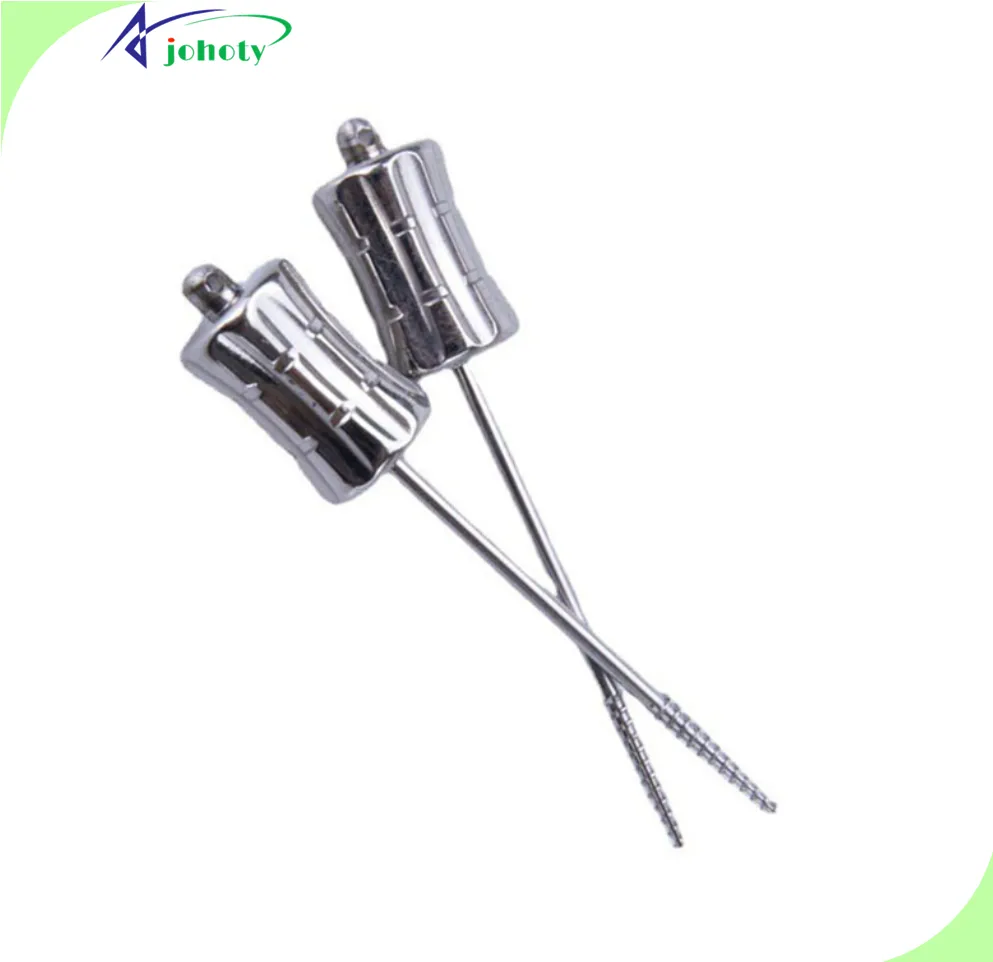
Precision optical/measuring instrument base and stage:
Challenges: The machine base requires high rigidity and thermal stability, and multiple sets of support surfaces and guide surfaces need to be standardized. Minor positional errors can amplify into measurement deviations.
Professional role: Johoty provides CNC milling services and parts under constant temperature and stable machine conditions. Perform one-time precision machining on the key reference surfaces and hole systems of the machine base.
Customization: Select low internal stress materials, arrange pre stress elimination and aging treatment, and unify fixture benchmarks. CNC milling services and parts accompanied by a three coordinate detection program.
Solutions: Unify the guide surface, installation surface, and positioning holes into the same coordinate system. Reduce scraping and gasket adjustment during assembly, making the measurement chain more stable.
Efficiency/Costs: The on-site precision adjustment time is shortened, and the number of repeated calibrations and repairs caused by machine base problems is reduced, resulting in a decrease in maintenance costs.
Advantages: Collaborate with clients to define measurement benchmarks and testing strategies in the early stages. Enable the output results of CNC milling services and parts to be directly integrated into the instrument error budget model, rather than simply qualified parts.
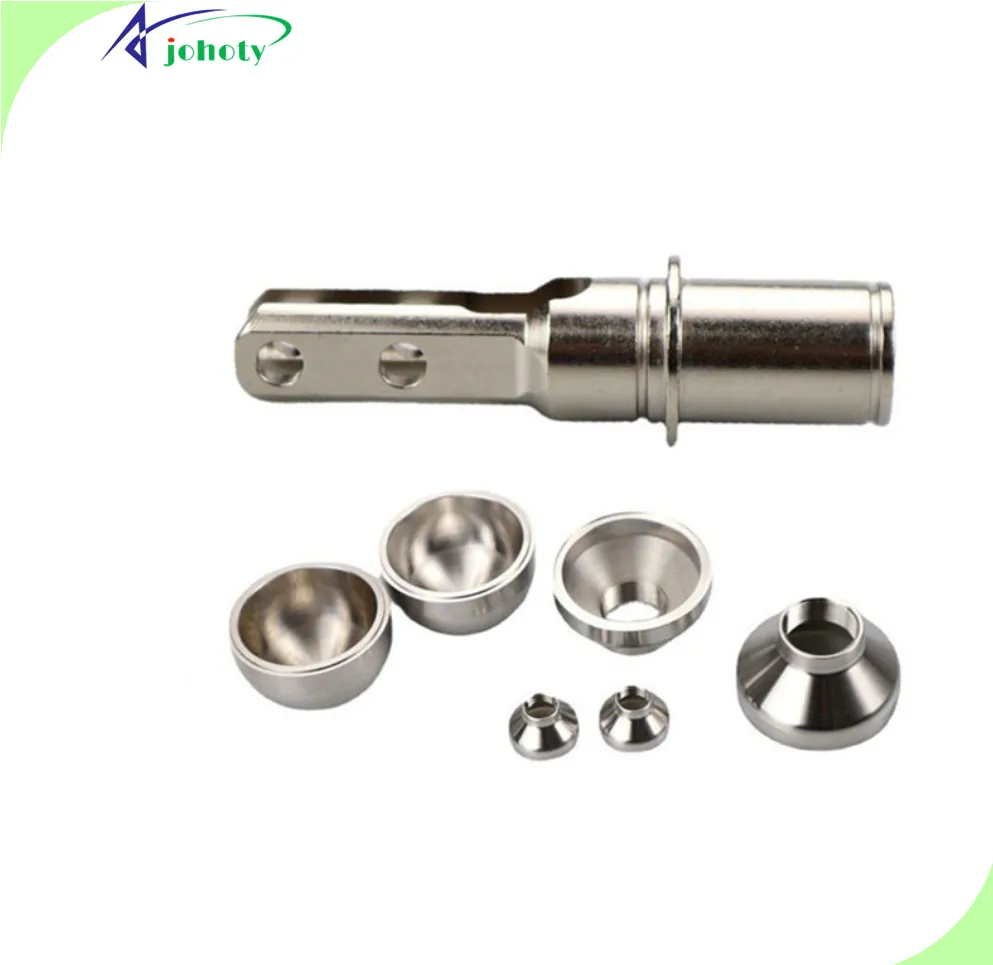
New energy vehicle battery casing/cold plate:
Challenges: Large size shell, long and complex cooling channels, thin-walled partitions, need to balance flow resistance consistency, leakage risk, and welding/assembly deformation.
Professional role: Johoty’s CNC milling services and parts can process flow channel grooves, sealing surfaces, and threaded holes as a whole. The key dimensions and positional tolerances meet the requirements of thermal management design.
Customization: Vacuum adsorption or multi-point support fixture, online sampling of channel depth. The processing strategy of reserving welding shrinkage allowance constitutes a dedicated cold plate process package.
Solutions: Set tight tolerance intervals for key flow channels based on fluid simulation results during the CAD/CAM phase. Ensure consistent flow characteristics of each cold plate using CNC milling services and parts.
Efficiency/Cost: The first pass rate of cold plates has been improved, leakage testing and repair time have been reduced, and the cycle time of battery packaging and wiring bodies has become more stable.
Advantages: With the accumulated size and flow data from long-term cold plate projects, engineers can more accurately evaluate the safety margin and consistency of thermal management systems.
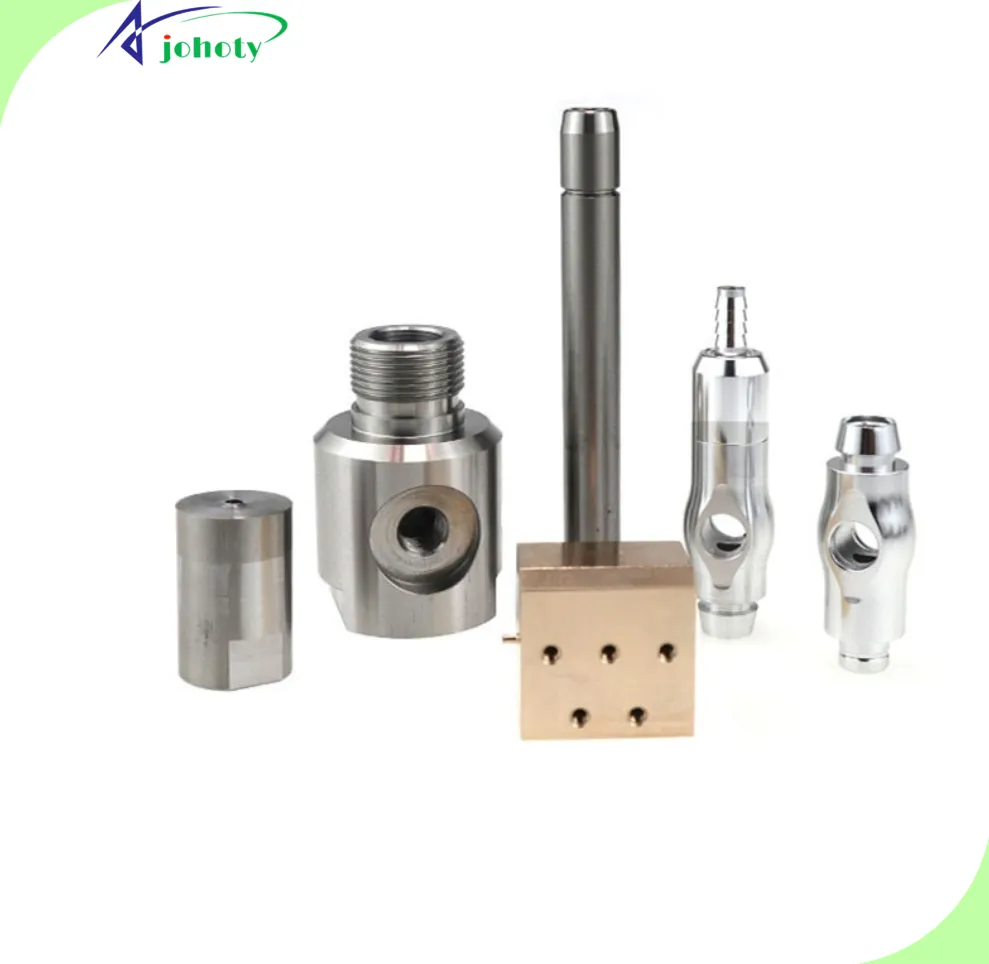
High-pressure hydraulic valve block/fluid manifold:
Challenges: Complex intersecting holes, dense blind holes, small hole spacing, any micro burrs or debris may jam the valve or contaminate the system.
Professional role: Johoty’s CNC milling services and parts consider coaxiality, roughness, and burr control in hole machining as key indicators of the same level as external shape.
Customized solution: Multi axis drilling and milling, specialized hole machining tools, and in hole camera inspection. And CNC milling services and parts for the closed-loop process of machining deburring and re inspection.
Solutions: Insert targeted deburring and cleaning steps into the process route, supplemented by flow/pressure drop testing. Ensure that the valve block can be directly entered into the bench for verification.
Efficiency/Costs: Significantly reduce on-site failures and factory troubleshooting time caused by valve block blockage and jamming. The cost of hydraulic system debugging and after-sales service has been reduced accordingly.
Advantages: Clear processing and testing standards are set for different hole systems and written into process documents. Engineers have a clear understanding of the control level of CNC milling services and parts over internal invisible areas.
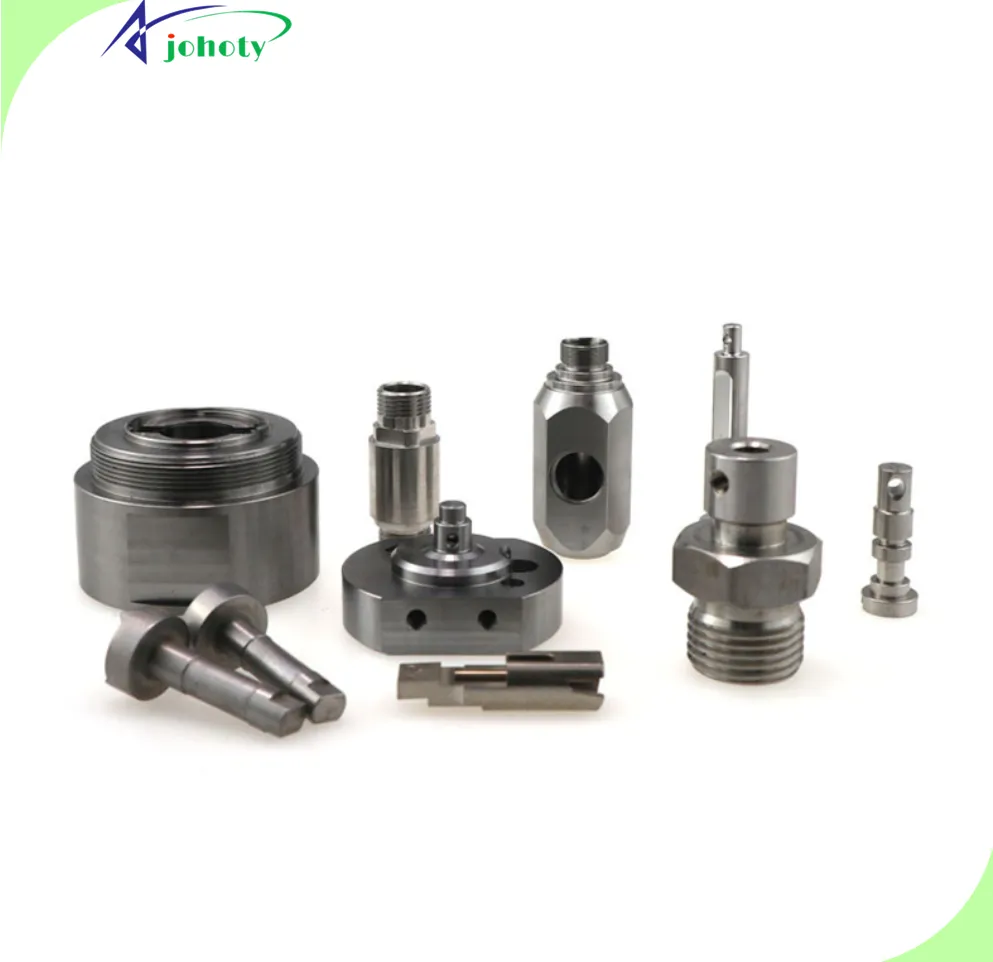
Complex fixture/quick change fixture platform:
Challenges: Frequent switching of multiple product sizes, requiring high repeatability positioning accuracy. At the same time, it is necessary to control the weight of the fixture and the cost of small-scale development.
Professional role: Johoty’s CNC milling services and parts process high-precision reference surfaces and positioning hole arrays. Provide a foundation for a modular fixture platform shared by multiple products.
Customized solution: CNC milling services and parts with standardized substrate + replaceable upper module, unified zero point system, and customized installation hole array according to the machine table.
Solutions: Design different product fixtures as plug-in modules. Keeping the platform benchmark unchanged, new products only need to replace upper level modules and programs to go live.
Efficiency/Costs: The preparation time for new products has been significantly reduced, tooling investment has been spread across multiple projects, and overall tooling costs and inventory pressure have decreased.
Advantages: Forming a process idea for an evolving tooling system. Engineers can directly reuse existing CNC milling services and parts platforms when planning production line expansion or product iteration. No need to design fixtures from scratch.
Advantages of Johoty’s CNC milling services and parts:
Johoty’s CNC milling services and parts offer quantifiable and reproducible high precision and geometric consistency
Issues that engineers often care about:
- Can the critical dimensions remain stable in the middle of the tolerance zone for a long time, rather than barely at the edges?
- What is the size drift between multiple workstations and batches?
- Will cumulative tolerances become a hazard during assembly?
Johoty’s abilities:
- Johoty’s CNC system is based on high-resolution encoders and laser interferometers for real-time monitoring and compensation of tool displacement. Maintaining micrometer level position and achieving ± 0.007 mm control on key features for high-end applications.
- Using a temperature control system and specialized coolant, thermal stability management is carried out on the machine tool body, cutting tools, and workpiece materials. Reduce size deviation caused by temperature drift.
- Cooperate with high-precision fixtures and automatic positioning systems to reduce benchmark errors during repeated clamping and multi process transitions. Ensure consistency in geometric relationships.
Benefits for engineers:
- In the assembly design that requires tolerance stack up, Johoty provides precision data that can be engineered. It is beneficial for you to have clear input in DFMEA/reliability analysis.
- For valve bodies, guide rails, connectors, etc. that require long-term mass production, micrometer level size control and thermal stability management. It can reduce the workload of research, repair, and rework between batches, and lower the uncertainty of the assembly site.
Johoty’s CNC milling services and parts have the ability to form complex geometries and concealed features in one clamping process:
Engineer wants to know:
- Can Johoty solve these difficult machining features on my drawings all at once? Including slanted holes, variable cross-section cavities, thin walls, non-standard chamfers, sealing grooves, and hidden reference surfaces. Instead of letting me break it down into two or three companies myself?
Johoty’s abilities:
- Use multi axis or five axis machining centers for synchronous machining. It can simultaneously cut complex surfaces and spatial features from multiple angles, reducing repetitive clamping.
- High frequency vibration cutting technology reduces cutting heat and chip removal difficulty. The processing of deep cavities, slender structures, and thin-walled parts is more stable, improving surface quality and reducing deformation risks.
- Johoty has the ability to process combination features such as unconventional threads and thin-walled cavities, which can be transferred to the comprehensive processing of milling parts.
Benefits for engineers:
- Reduce process splitting and multiple outsourcing: Complex CNC milling services and parts can complete most key features in the same clamping system. Reduce benchmark deviation caused by repeated alignment and clamping.
- Internal flow channels, sealing steps, eccentric holes, misaligned grooves, etc., reduce performance fluctuations caused by geometric errors in the later stage. Because a single clamping process can better ensure the spatial relationship and coaxiality/parallelism between these features.
- Fluid control components, precision guide components, medical device structural components, and optomechanical structural components can ensure accuracy. Because many problems do not arise from a single size, but from deviations in complex geometric relationships.
Our CNC milling services and parts provide comprehensive control of various high-strength materials and surface integrity:
Engineer’s Challenge:
- Many suppliers are only good at conventional aluminum parts. However, on stainless steel, titanium alloy, high nickel alloy, or engineering plastics, accuracy, deformation, and surface integrity are difficult to guarantee.
- High end applications require a comprehensive effect of material and surface conditions such as fatigue life, corrosion performance, contact stress, friction and wear, not just size OK.
Johoty’s abilities:
- Johoty has experience in precision machining of stainless steel, aluminum alloys, titanium alloys, and high nickel alloys. We can adapt the tool and cooling method to control the machining temperature rise and thermal deformation.
- Process optimization and tool planning achieve a balance between material removal rate and cutting force. Reduce residual stress and deformation risk, suitable for thin-walled parts, slender shafts, and complex shells.
- Johoty can meet the strict requirements for surface roughness, corrosion resistance, and wear resistance of parts through precision grinding, polishing, and surface coating processes.
Benefits for engineers:
- Johoty can achieve 304/316 stainless steel, 7075 aluminum, Ti alloy, and engineering plastics. Beneficial for simplifying the overall BOM and supply chain, reducing cross supplier quality inconsistencies.
- When verifying fatigue, sealing, and friction pair performance, Johoty can comprehensively control material and surface integrity. Engineers can more confidently correlate simulation and experimental results with the machining process.
- The materials and surface conditions of aviation, medical, and automotive safety components often directly determine the failure mode. A stable and reproducible process is more valuable than making a single sample beautifully.
Our CNC milling services and parts engineering customization process from design collaboration to quality traceability:
Engineer’s Challenges:
- Can suppliers participate in DFM/DFX during the design phase and expose manufacturing risks in advance?
- Do samples, trials, small batches, and mass production share the same set of process ideas and quality standards?
- Are quality records, testing data, material batches, etc. traceable and auditable?
Johoty’s process and system:
- Johoty can provide CAD design support, material selection recommendations, CNC machining process optimization, trial production and testing, quality control to packaging. Build a collaborative platform for engineering teams.
- Embedded automatic detection and feedback for real-time detection of size, shape, and surface condition. Adjust process parameters immediately when deviations occur, without relying on final inspection to eliminate defective products afterwards.
- Standardized dimensional inspection, roughness and geometric accuracy testing, material and process recording, form a complete quality traceability chain. Meet the requirements of high-end industries for process documents and data.
Benefits for engineers:
- CNC milling services and parts have consistency from original concepts, engineering prototypes, small batch validation to mass production. Johoty manages with the same logic and quality framework, not one set of methods for sample production and another set of methods for mass production. For new platform development and customized subsystems that require multiple iterations, high consistency is crucial.
- You can use Johoty’s DFM/process optimization suggestions to avoid creating drawings that are theoretically feasible, have extremely high actual processing costs, or pose significant risks. Reduce post production rework and design changes.
- For medical devices, automotive components, and industrial safety equipment, there must be clear quality records and process traceability. This is beneficial for passing customer audits, third-party certifications, or on-site audits.
FAQ
Johoty’s focus when dealing with high-precision dimensions is not on promising a single number. We need to design the entire process as a verifiable system:
The preliminary information clearly states:
- Request the customer to provide: 3D model + 2D drawing with GD&T, material grade, heat treatment requirements, and description of key functional surfaces.
- Mark the key dimensions and functional dimensions during the review stage, distinguishing them from general dimensions.
Prioritize stability over extreme design for processes and fixtures:
- Prioritize using one clamping to complete as many key surface machining as possible, reducing benchmark conversion.
- Design specialized fixtures or soft claws in advance for structures that are prone to deformation such as thin-walled, long axis, and deep cavities. Provide feasible tolerance range recommendations during the review process.
Stable management of machine tools and cutting tools:
- Fixed machine tools and fixed tool combinations for critical dimensional processes should not be replaced arbitrarily.
- Regularly review and control cutting parameters for tool repair and tool length repair. Avoid dimensional drift caused by tool wear.
Measurement and statistics during the process:
- Key dimensions are inspected using first piece and process sampling, with 100% full inspection conducted on key dimensions.
- Use measuring blocks, ring gauges, etc. to periodically calibrate measuring tools to ensure the reliability of the measurement system.
- For batch projects, Cpk and size distribution can be provided according to requirements, allowing engineers to assess process capability.
Batch consistency control:
- Establish process cards and inspection records for Johoty’s CNC milling services and parts, and do not change the process arbitrarily. If it is necessary to change the machine tool, cutting tool, or fixture, the key dimension results will be reconfirmed.
If needed, you can directly specify the target tolerance level and the most sensitive dimensions during the inquiry stage. Johoty will evaluate based on this whether it can be stably implemented and whether it is necessary to fine tune the design or tolerance bandwidth.
When evaluating such high difficulty features, Johoty focuses more on manufacturability risks rather than simply answering whether they can or cannot:
Expose all features in advance:
- Annotate on 3D or 2D drawings: high aspect ratio of deep cavities, thin walls less than 1.00 mm, local sharp angles, curved transitions, hidden oil/cooling channels, etc.
- Briefly explain the functional priority of these features: Can minor structural adjustments be accepted, such as adding ribs or enlarging the R-angle.
Provide manufacturability recommendations instead of just quoting prices:
- For deep cavities: the recommended maximum depth/cavity width ratio, is it necessary to open process holes, and is it recommended to design separately before assembly?
- For thin walls: it is recommended to estimate the minimum thickness, processing sequence (coarse first, heat treatment then fine processing), and possible deformation.
- For invisible cavities: Propose whether additional inspection holes, cut samples, or CT scans can be used to verify.
Geometry and tool limitations:
- For the inner R-angle and step structure, the minimum achievable R-value and angle limitation are based on the tool diameter/machining path.
- The minimum required curvature radius and smoothness of transition areas for free-form surfaces and impeller components.
Trial production and verification:
- For high-risk features, start with a small trial production of CNC milling services and parts. Deformation measurement and assembly verification, and then locking the final drawing.
- If the customer has FEA/structural simulation results, key area information can be shared. Johoty will avoid stress sensitive areas or add reinforcement measures locally in the process.
Send the data back to the design team:
- Discovering actual deviations, deformation trends, processing marks, etc. during trial production. Johoty can organize it into a simple feedback document as the basis for engineers’ next round of design optimization.
Through this approach, engineers can clearly understand which extreme designs are machinable, which ones require compromise, and their respective risk boundaries.
For common CNC milling services and parts high mix, small batch projects, Johoty usually controls risks from data and processes:
Version and file management:
- Fixed use of customer-specified file formats: STEP/IGES+PDF drawings. Each change must be accompanied by an update date and version number.
- Only use the version number confirmed by the customer as the production basis. Verbal or email descriptions will not directly enter production and must be implemented in the new document.
Engineering review and change records:
- Each new version undergoes a brief engineering review before production. Confirm the change area, affected dimensions/processes/inspection items.
- For versions that have already been produced, keep change records and indicate from which batch the new version was implemented.
Clear quality verification hierarchy:
- First batch trial production: FAI (First Article Inspection) can be carried out according to customer requirements. And provide a complete size report/critical size report.
- Stable batch: Adopting full inspection of key dimensions and visual/functional inspection, the inspection content and frequency can be adjusted according to the risk level.
Traceability:
- Each part or small batch of CNC milling services and parts maintains a unique batch number and date code. Traceable to the corresponding drawing version, material batch, and inspection records.
- For CNC milling services and parts that require materials, heat treatment, and surface treatment, corresponding material certificates and heat treatment reports can be attached as needed.
Clear communication methods across time zones:
- Establish a fixed technical contact person and consolidate all technical issues for centralized response, reducing the need for information to be split across multiple channels.
- For subjective descriptions of ambiguous surfaces with no visible knife marks, align standards in a timely manner through photos/example samples.
In this way, engineers can have a clear understanding of:
- Which version of the drawings for CNC milling services and parts are currently being processed?
- Has each batch of CNC milling services and parts undergone the expected level of inspection?
- When a problem occurs, which batch of CNC milling services and parts, and which process and material can be traced back to?