

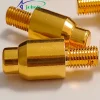
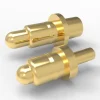
Challenges Johoty ball point pogo pin can solve
Challenges:
When sliding connections become a bottleneck in your design, Johoty ball point pogo pin will solve your pain points:
Wear and Scratch: Standard flat or pointed pogo pins scratch the mating PCB pads or conductive surfaces like plows when sliding laterally. Causing rapid deterioration of the contact surface, as well as breakage of the plunger or barrel wear. Affects the entire system on long-term stability and reliability.
Signal instantaneous interruption: In the composite motion of vibration accompanied by sliding, traditional pogo pins cannot respond to lateral force in a timely manner. resulting in microsecond level signal dropout. This kind of instantaneous disconnection not only affects the accuracy of data transmission, but may also lead to the performance collapse of the entire system. It is particularly deadly in high-frequency, high-precision data acquisition or audio transmission.
Travel restrictions: The fitting structure requires long-distance sliding, and the extremely short compression stroke of ordinary pogo pins cannot compensate for mechanical tolerances. This can lead to poor contact or plastic deformation, which in turn can cause system failures and affect production efficiency and product quality.
Spring overvoltage risk: In conventional design, current flows directly through the spring. Resulting in an increase in impedance, the spring will lose its elasticity due to heating, ultimately leading to premature aging of the connector. Long term current overload can reduce the stability of the system and cause unexpected faults in the entire circuit.
How to solve challenges with Johoty ball point pogo pin
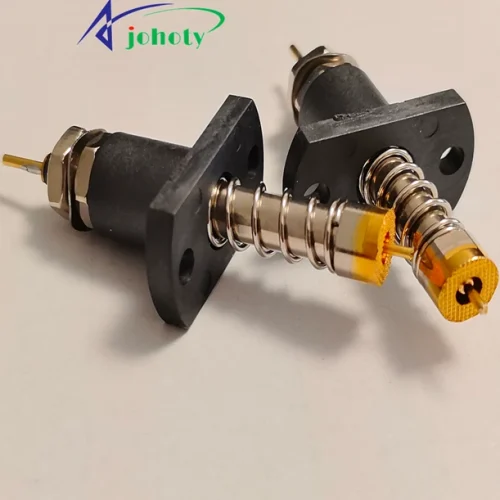
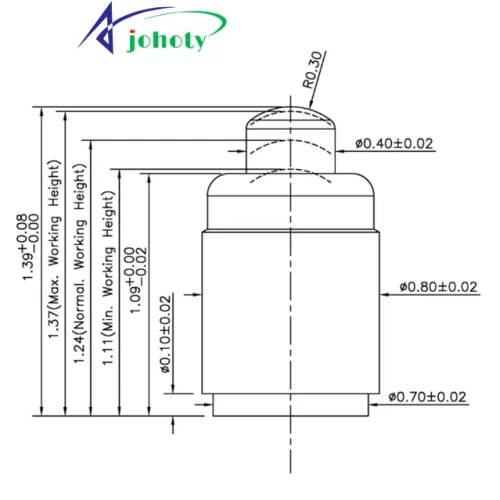
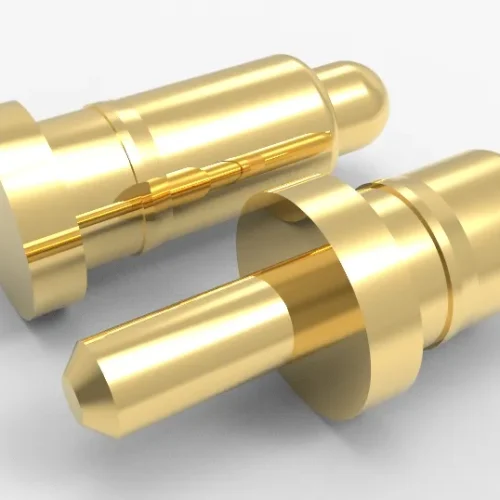
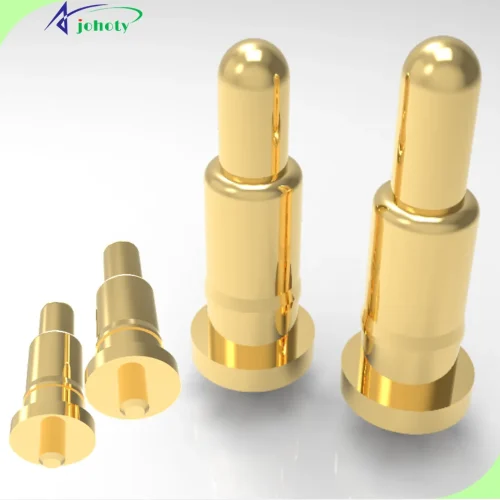
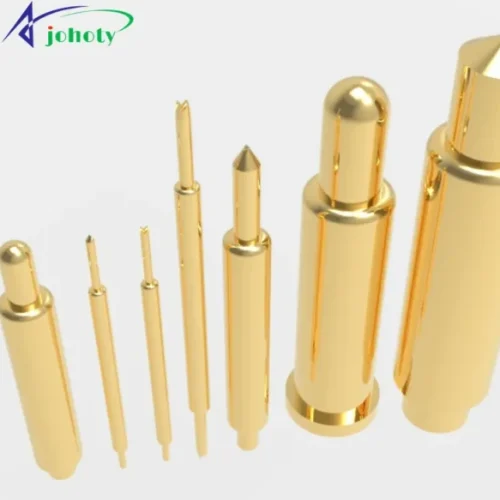
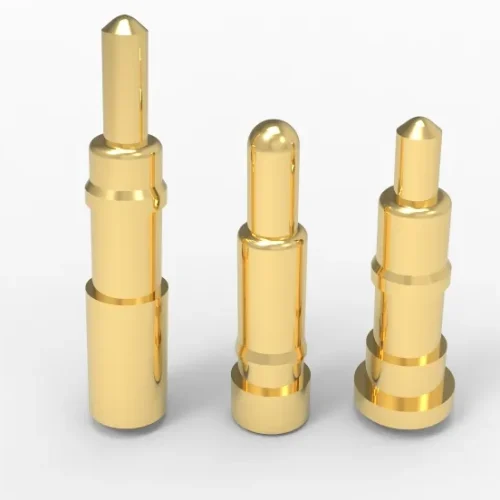
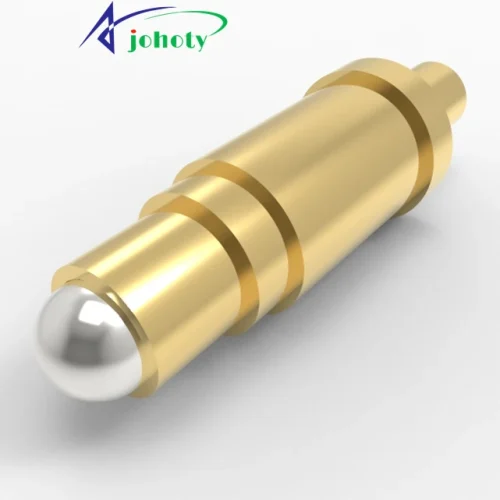
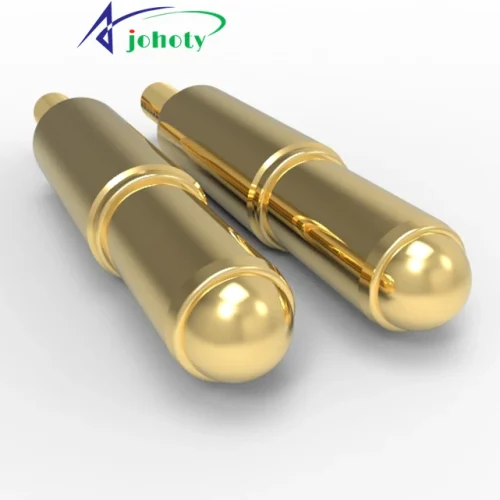
Ball point pogo pin is an innovative solution specifically designed to address challenges faced by traditional pogo pins in sliding. Through unique ball head design, it can effectively eliminate friction and scratches during lateral sliding, protecting PCB pads from damage. Meanwhile, its precise pressure regulation ensures stable contact and no signal interruption during long-term high-frequency sliding.
Wear resistant design: The contact surface between the metal sphere and the probe is used. Reduced friction with the PCB surface, greatly reduced wear rate, and extended service life.
Signal stability: The ball head design can intelligently adapt to the lateral force distribution during the sliding process. Under complex vibrations and sliding, it can maintain microsecond level signal stability and avoid dropout.
Travel adaptation: The finely designed spring travel can compensate for mechanical tolerances. Ensure that the ball point pogo pin maintains optimal contact during the sliding process. Avoiding the risk of poor contact and plastic deformation.
Thermal stability: Internal current path optimization design effectively reduces spring heating and contact resistance issues. Extend the spring lifespan, avoid losing elasticity due to overheating, and thus improve the overall connector reliability.
Categories of Johoty ball point pogo pin
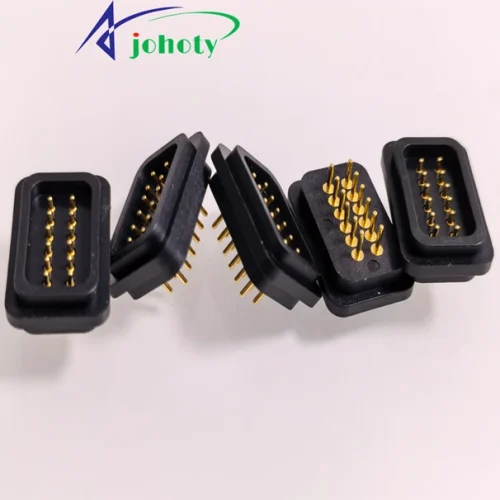
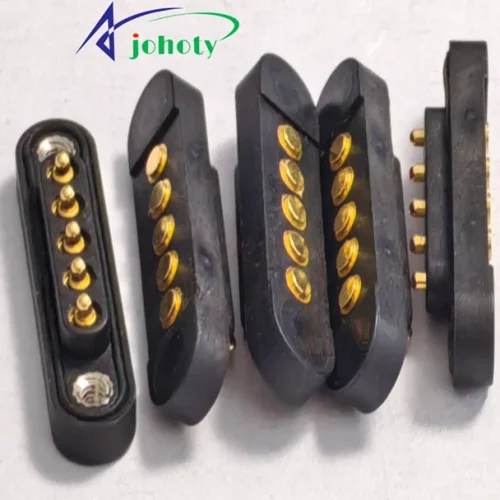
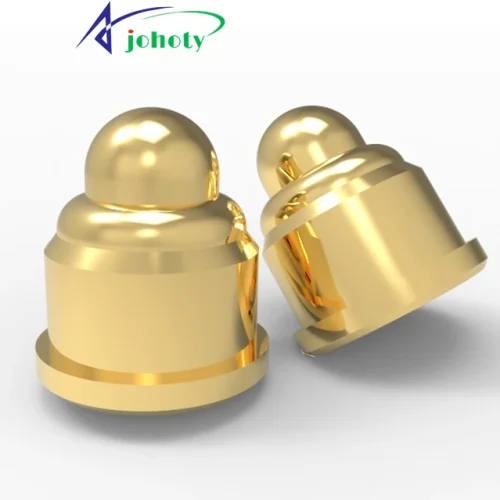
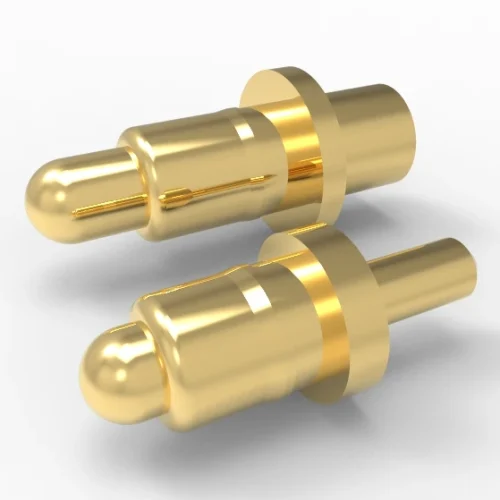
Johoty can design ball point pogo pin based on 8 types of shapes below to meet what you are looking for:
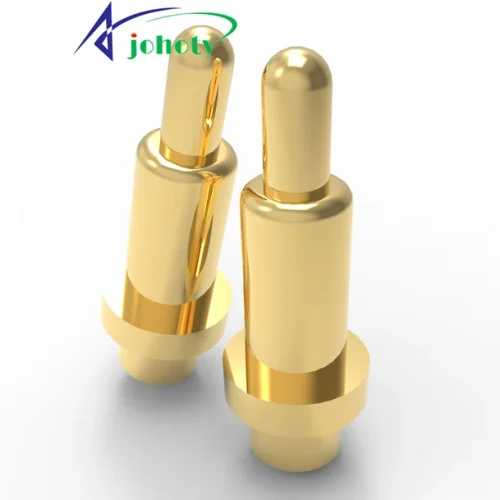
Through Hole Pogo Pins: The tail pin extends vertically and is suitable for inserting into PCB through holes for soldering. Transferring lateral force from solder pad to the entire hole wall can withstand greater rocker torque.
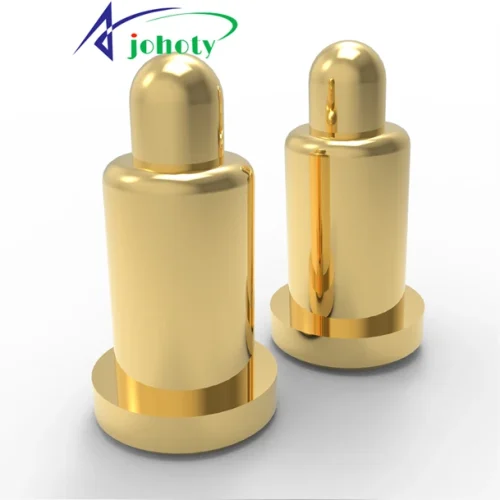
SMT Pogo Pins: Barrel bottom is a complete flat surface, directly attached to PCB solder pad, extremely low and stable. Let lateral force be dispersed by bottom surface contact to prevent instantaneous displacement caused by vibration.
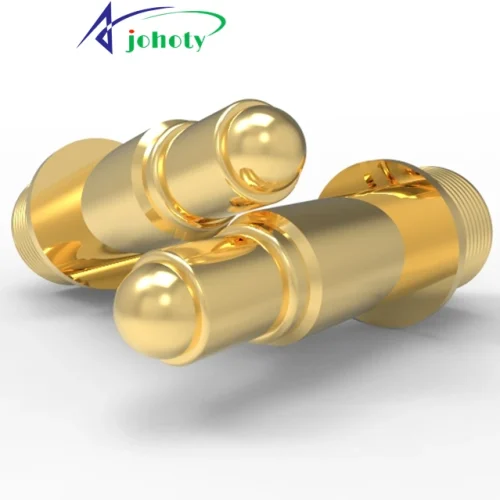
Double Ended Pogo Pin: Both ends have floating ball tip, middle barrel is fixed, and it floats in both directions, completely isolating lateral forces.
Solder Cup Pogo Pins: The tail has a cup-shaped groove, providing a larger tin-soldering area and wire fixing points. The interior is only an electrical connection point, and the ball tip terminates the lateral force on the wire sheath.
Right Angle Pogo Pin: The tail pin extends horizontally from the side, changing the direction of force for sliding rails or parallel connections.
PTH Bent Pogo Pin: The tail pin is bent at a 90° or specified angle. Convert the lateral force in the vertical direction into torque at the tail end. And buffer the mechanical impact through a specially designed bending angle.
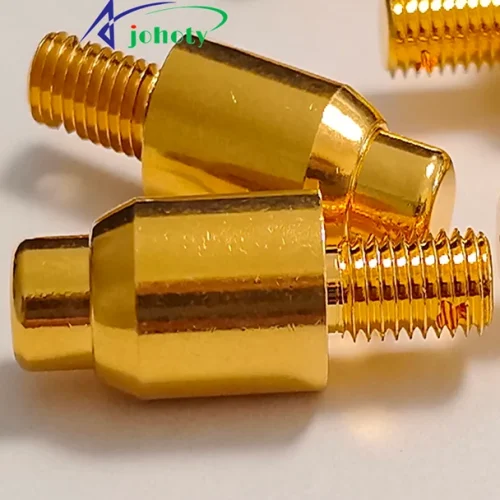
Threaded Pogo Pins: Withstand high lateral forces. Lateral force is borne by metal shell and threads, and the internal plunger only moves axially under no stress.
High Current Pogo Pins: Johoty can achieve ball point pogo pin of ≤5A, transforming lateral sliding friction into rolling friction of a sphere. Resolve adhesive wear under high current conditions.
Technologies Breakdown of Johoty Ball Point Pogo Pin
Ball head contact surface: the first line of defense against lateral forces
Principle: Plunger tip is embedded in a precision polished ball with extremely high surface hardness and excellent conductivity.
Ultimate response to lateral force: When lateral force strikes and the plunger is about to rub against mating surface, this ball will rotate freely first. It converts the destructive sliding friction into tiny rolling friction. Fundamentally eliminating scratches and wear on the mating coating, ensuring good contact even after 100,000 connections.
Multi-stage travel: Absorber for lateral displacement
Principle: Johoty adopts innovative plug-in tips, caps, T-pins, springs, and other scalable designs.
Response to lateral force: When the lateral force squeezes the ball, the ball at the ball point pogo pin needle position will immediately retract. The small internal contraction of the ball can absorb horizontal displacement and prevent the plunger from bearing bending moments. When the vertical pressure reaches the threshold, the plunger of the ball point pogo pin will only be pressed down. Johoty’s graded design ensures that when the PCB is warped or improperly installed, the plunger remains perpendicular to the contact surface. It can achieve stable connection with zero lag.
Anti-instantaneous-break spring: ensuring signal continuity
Principle: An elastic spring claw is precisely integrated inside the barrel, always tightly gripping the plunger.
Ultimate response to lateral force: During random vibration testing, severe lateral force may cause the spring to vibrate at high frequencies, instantly losing positive force. At this point, this mechanical spring claw will play a crucial role. Its physical clamping force can be independent of the spring. Within the millisecond gap of spring failure, the contact between plunger and barrel inner wall is still forcibly maintained. This design allows the ball point pogo pin to achieve zero signal interruption and zero instantaneous interruption.
Forced bypass conductive design: the golden current channel
Principle: Johoty has changed the traditional design where current must flow through a spring. A highway was established for ball point pogo pin through an internal insulation guiding structure.
Response to lateral force: Current passes through the ball to the plunger sidewall, through the inner wall of the needle tube, and finally to the bottom solder pad.
Results: The current does not pass through the spring 100%, and the Johoty ball point pogo pin can:
Eliminate heating: Eliminate temperature rise caused by changes in spring resistance.
Prevent melting: When there is a high current or short circuit, the spring is no longer a fuse in the circuit.
Maintain constant elasticity: The spring does not anneal, achieving a unified mechanical and electrical lifespan. The dynamic contact resistance can be stably maintained at <20mΩ, ensuring stable transmission of high-speed signals.
Comparison Between Traditional Pogo Pin and Johoty Ball Point Pogo Pin
Clear comparison between traditional pogo pin and Johoty ball point pogo pin when subjected to the same lateral force:
| Items | Traditional Pogo Pins | Johoty Ball Point Pogo Pin |
|---|---|---|
| Lateral force tolerance | Easy to get stuck, wear and tear, leading to poor contact | Ball rotation for unloading force, multi-stage stroke for absorbing displacement, smooth and unobstructed travel |
| Dynamic contact resistance | >50mΩ, with severe fluctuations | <20mΩ, ultra stable |
| Overload current path | Flowing through the spring, prone to heating and melting | Forced bypass, spring zero current, capable of carrying higher current |
| Vibration performance | Spring vibration causes signal instantaneous interruption | Spring claw mechanical clamping achieves zero instantaneous breakage |
| Wear and tear on the mating surface | Scratching of plunger tip and severe damage to coating | Ball rolling, almost zero wear |
Applications of Johoty Ball Point Pogo Pin

Sliding cover and rotating mechanism:
Applications: Grip rotation structure for industrial scanning guns, hinge axis connection for high-end flip phones or test stands.
Lateral force challenges: Traditional FPC ribbon cables are prone to breakage due to repeated back and forth bending per second. Even with regular pogo pins, when sliding sideways, the tail will still jam and even grind out debris.
Ball point pogo pin solutions:
Technology: Johoty ball point pogo pin uses ball head rolling friction instead of flat head/pointed/semi-circular head sliding friction. When the mechanism rotates, the ball head rolls on the contact surface, decomposing the lateral force into almost zero radial components.
Comparison: Johoty has conducted tests with a reciprocating sliding stroke of 3.00mm and a frequency of 2.0Hz. The contact resistance of a regular pogo pin skyrockets by more than 100mΩ after 50,000 cycles. However, the resistance change of a ball point pogo pin is still less than 20mΩ after 300,000 cycles. Its dynamic conductivity life is increased by more than 5 times.
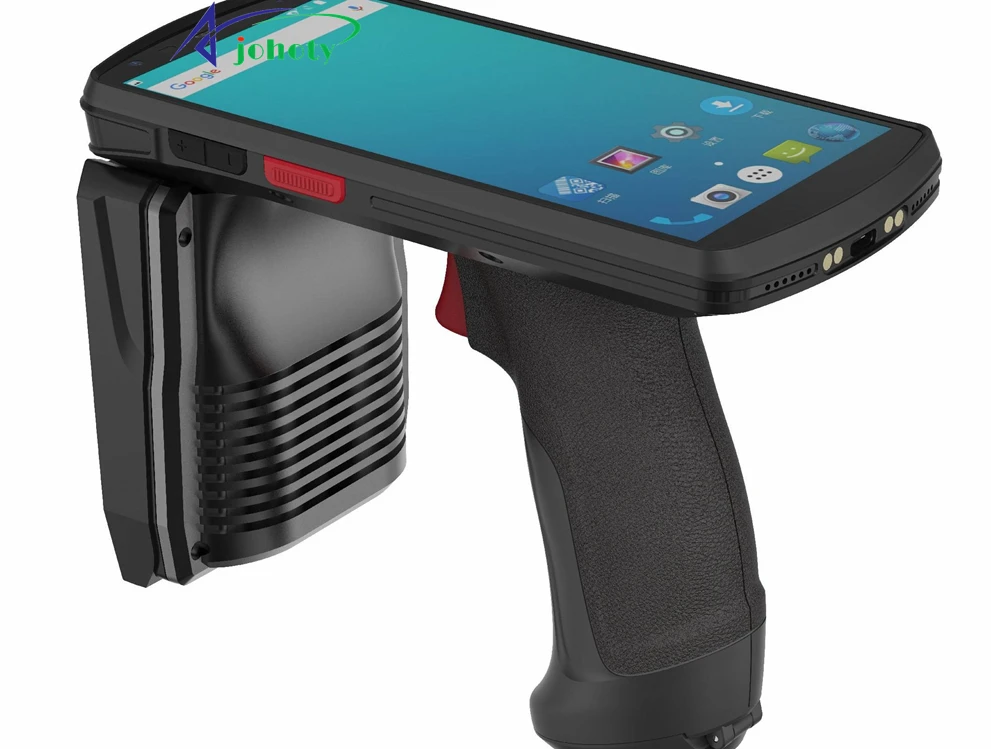
Magnetic floating connection:
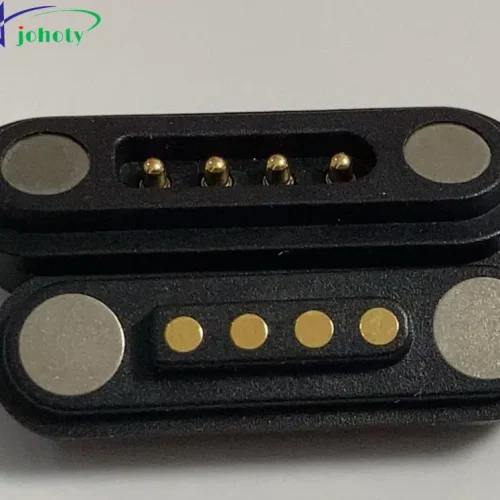
Applications: Desktop magnetic charging dock for medical PDAs, keyboard connection port for 2-in-1 tablets.
Lateral force challenges: Engineers strive for a perfect user experience, but mechanical tolerances and angle deviations during blind insertion are nightmares. When pogo pins hit concave contact at an oblique angle, huge lateral force can instantly bend or break the plunger.
Ball point pogo pin solutions:
Technology: The ball head is equivalent to a universal joint. Magnetic guidance of charging dock will automatically rotate and align ball head when inserted with small deviations or tilts. Always press in a direction perpendicular to the contact surface. The force always conducts vertically, protecting the barrel from bending.
Zero risk commitment: Johoty promises that pogo pin has zero risk of bending failure within the specified floating range and insertion angle. Make your product pass drop testing and rigorous certification in one go.

High current side-slip applications:
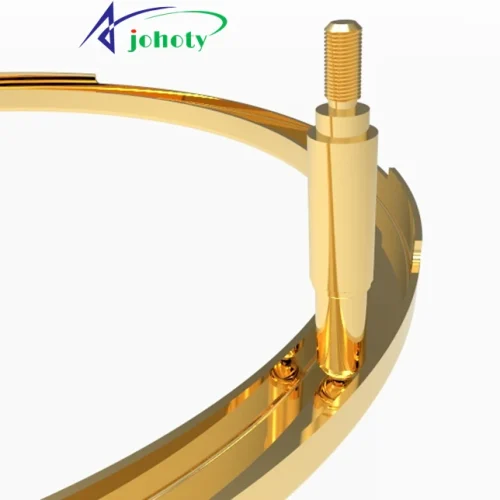
Applications: Battery holder charging for electric tools, side slip ring charging for AGV robots.
Lateral force challenges: When a high current of 3A-5A passes through, any small contact resistance will generate heat. Lateral sliding causes the contact area to fluctuate. Instantaneous high temperature is generated, accelerating the annealing of the spring, ultimately leading to poor contact or even burning.
Ball point pogo pin solutions:
Technology: Johoty adopts a bypass conductive design. The current does not pass through the spring, but is directly conducted through the thickened copper barrel and ball. Our ball head is self-cleaning, scraping off the oxide film, and can maintain contact with the new metal layer.
Comparison: Under the condition of 5A continuous current and lateral sliding, the temperature rise of a regular pogo pin can reach 45℃. The temperature rise of the ball point pogo pin is stably controlled within 30℃. Johoty can help you achieve lower energy loss and higher charging efficiency.
High frequency grounding:
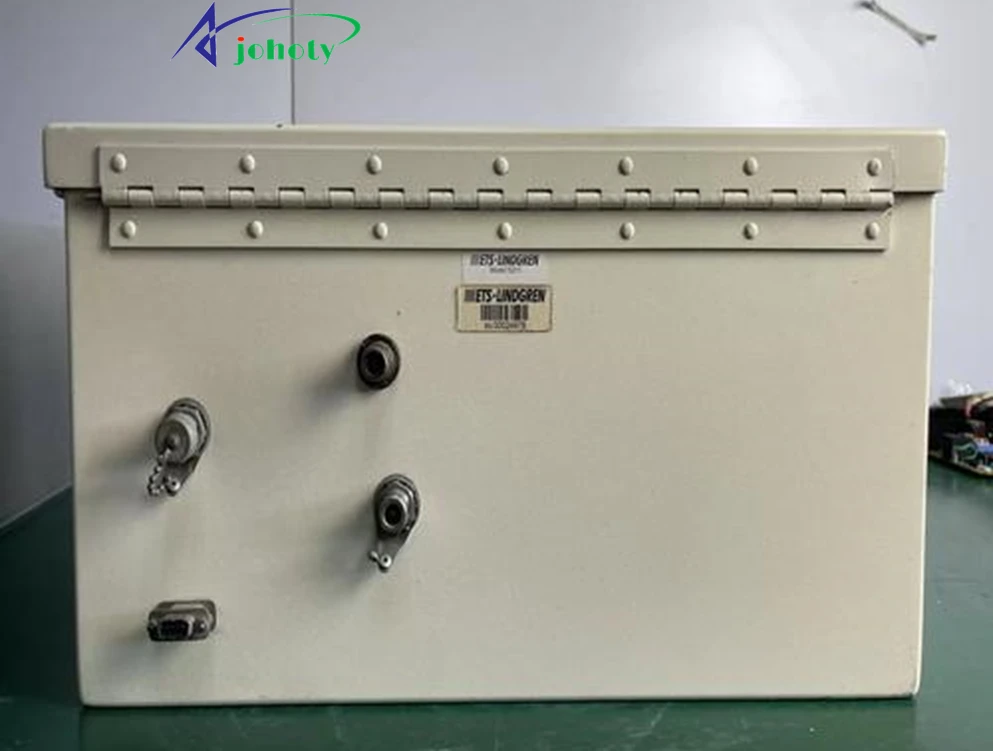
Applications: RF test bench, grounding connection inside shielding box, high-speed backplane connector.
Lateral force challenges: For EMI/EMC design, the dynamic contact resistance of the grounding circuit is crucial. Lateral vibration causes the grounding pogo pin to momentarily detach. This will generate small discharge noise, interfere with high-frequency signals, and lead to misjudgment of test data.
Ball point pogo pin solutions:
Technologies: Ball point pogo pin uses a pressure of >200gf from the ball head to remove contaminants and form metal contact. Even if there is vibration in the device, the rolling of the ball head ensures continuous displacement of the contact point, rather than intermittent jumping.
Conclusions: Using Johoty ball point pogo pin, the impedance fluctuation of the grounding circuit under dynamic conditions is minimal. It can effectively reduce EMI interference and ensure the authenticity and reliability of your RF test data.
FAQ
- Frequent microsecond level disconnections or signal jitter in dynamic applications are not a problem with PCB layout. But rather the physical structural defects of traditional pogo pins.
- When the device is subjected to lateral force, non-axial stress is generated between the barrel and plunger of the pogo pin. This can lead to two fatal consequences: a sudden surge in contact resistance, causing signal interruption. Abnormal scratching occurs between the inner wall and the coating, generating debris and further deteriorating the contact.
- Johoty’s original ball point pogo pin is essentially a miniature universal ball joint. When lateral force strikes, the plunger tip is not a hard resistance. But it decouples lateral stress through automatic rotation of the sphere. Regardless of the direction of force, the plunger always maintains the maximum contact area and the most stable contact pressure with the contact surface. This can prevent micro disconnection from the physical root.
- Thickening the coating is only a passive defense that addresses the issues rather than its root cause. Not only does it increase costs, but once the wear threshold is exceeded, faults will still occur. The real pain point lies in the friction method.
- Traditional pogo pins experience sliding friction between the plunger sidewall and pad when subjected to lateral forces. This is to cut the coating.
Johoty’s solution is to introduce the principle of rolling friction. The plunger of the ball point pogo pin can withstand lateral displacement when in contact with the pad. Its rounded spherical surface produces tiny adaptive rolling. Transform the originally destructive sliding scratches into almost undamaged micro rolling contacts. - In the lateral vibration test, the contact wear depth of the ball point pogo pin is only 1/5 of that of the traditional structure. This can protect the pad at the contact end, and the pogo pins have also successfully passed the 100,000 life test. For industrial, medical, or automotive customers who pursue long-term reliability, this can exponentially reduce maintenance costs.
The gimmick risk you are concerned about is precisely the core obstacle that Johoty wants to eliminate in the ball point pogo pin. We achieve this through extreme structural design and rigorous process validation. The ordinary ball head only changes its appearance, while the Johoty ball point pogo pin is a complete solution.
Firstly, the Johoty ball point pogo pin is not simply a soldering ball. It is an integrated structure formed through precision craftsmanship, ensuring that the ball will never fall off when subjected to lateral forces.
Secondly, this pogo pin can cope with dynamic contact failure caused by lateral forces. Johoty has optimized the internal dual spring or single spring layout. When the ball head rotates, the spring always provides a stable positive force. No matter how much the plunger tilts, the current path remains unobstructed.
Finally, when you choose Johoty ball point pogo pin, it is definitely correct. Because you are purchasing a zero risk solution for sliding connection wear and lateral force offset. In the sample testing, you did not see any improvement in signal stability or extension of wear life due to lateral force. Johoty offers unconditional technical review and full refund. This is Johoty’s absolute confidence in the performance of ball point pogo pin as a professional manufacturer.