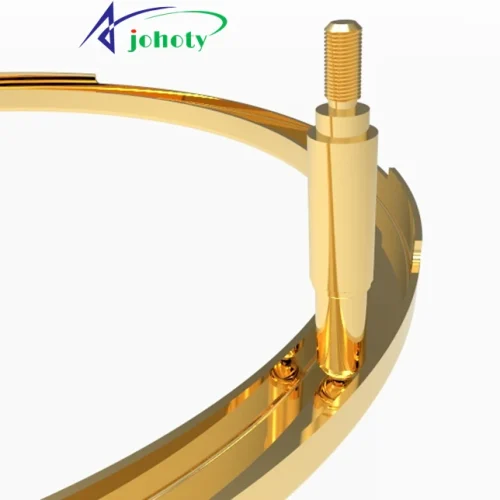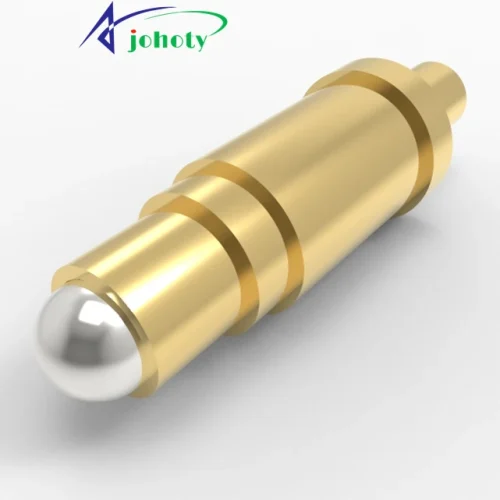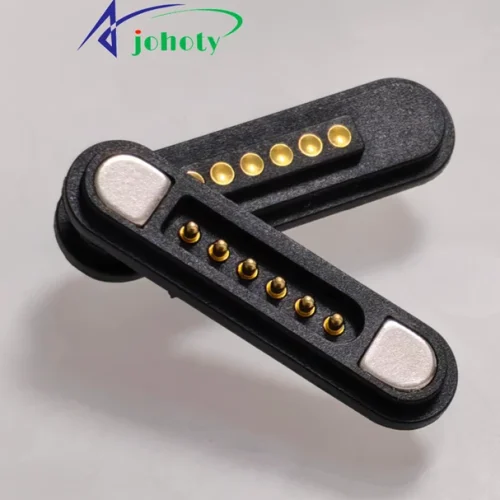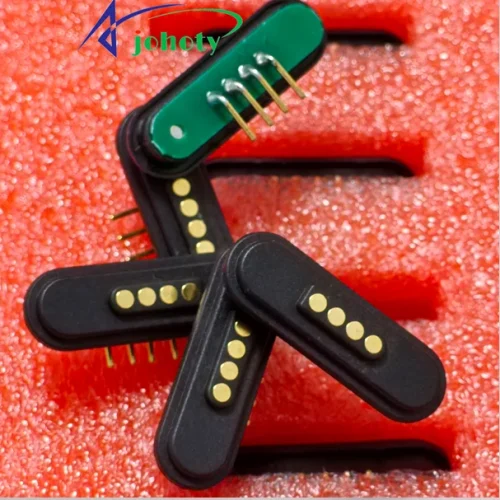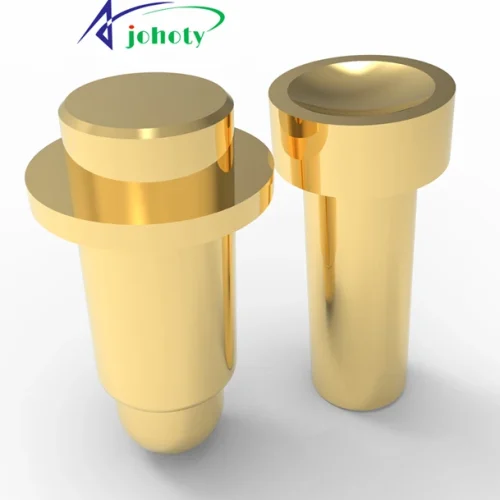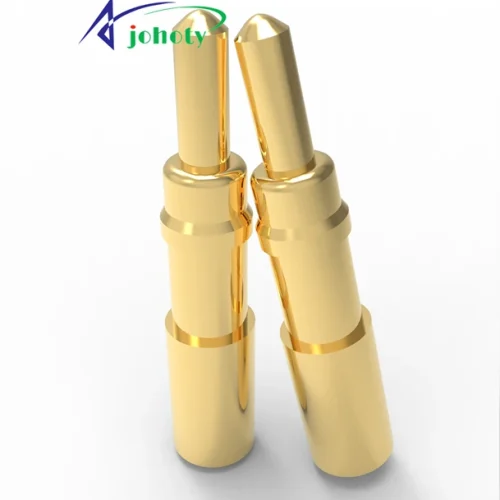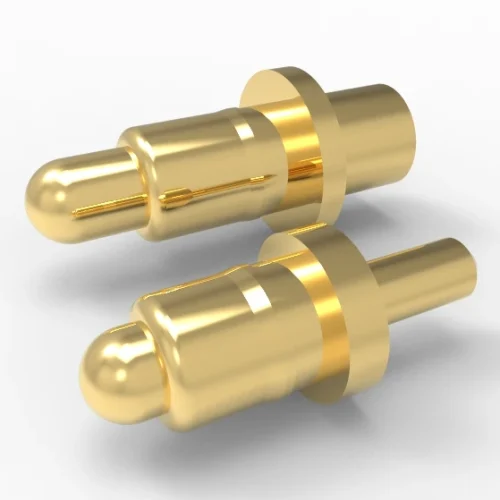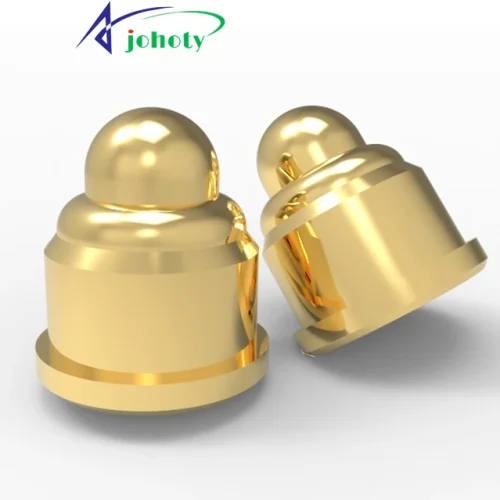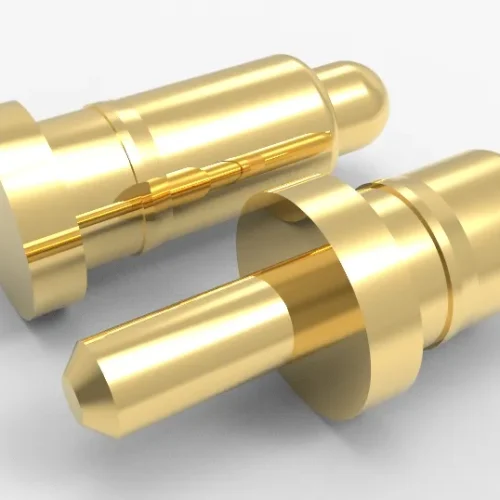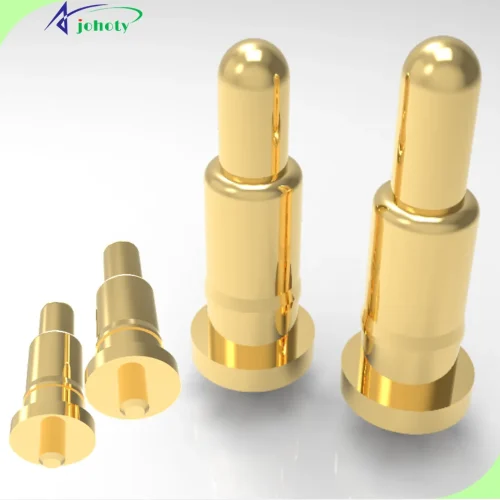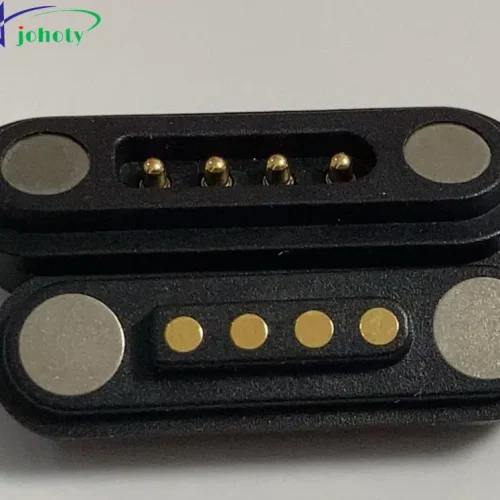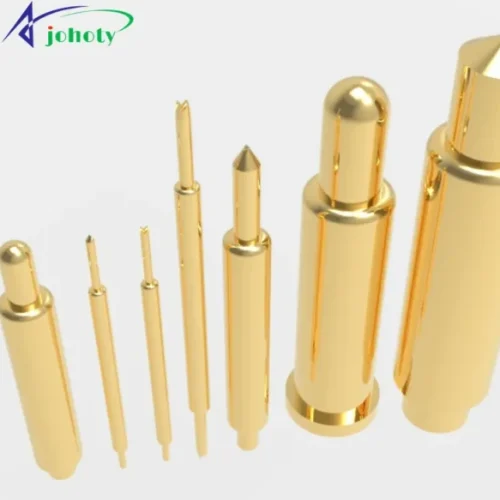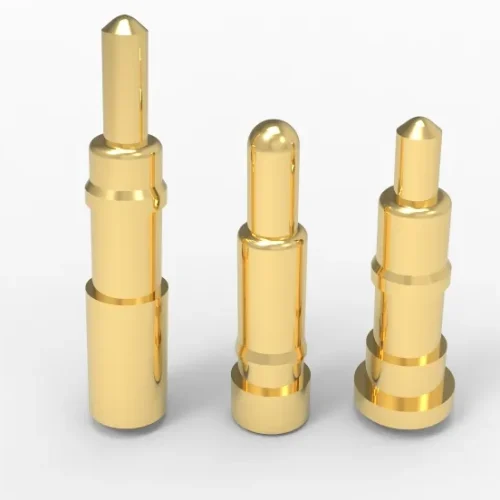


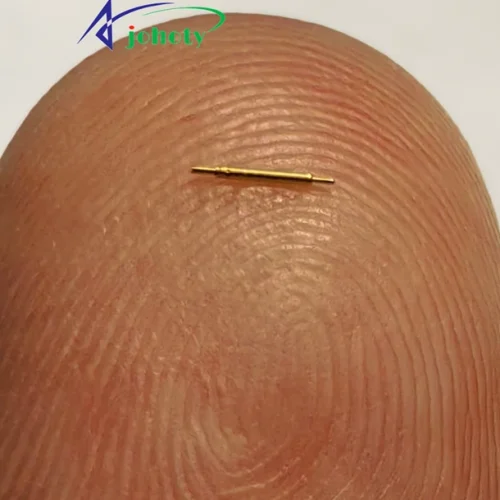
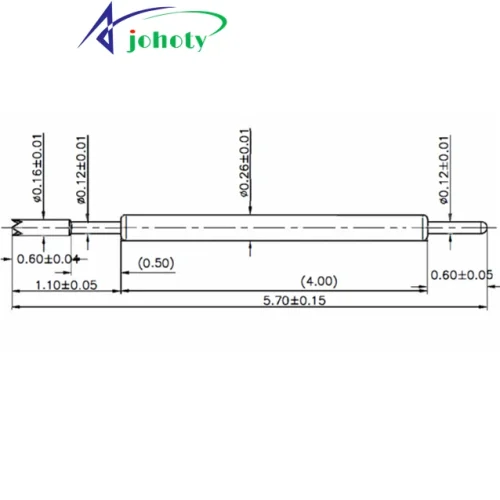
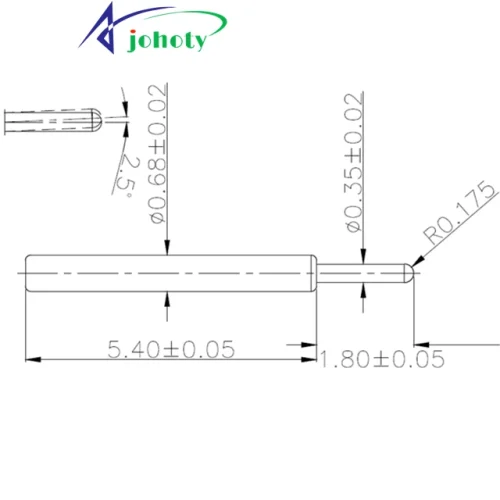
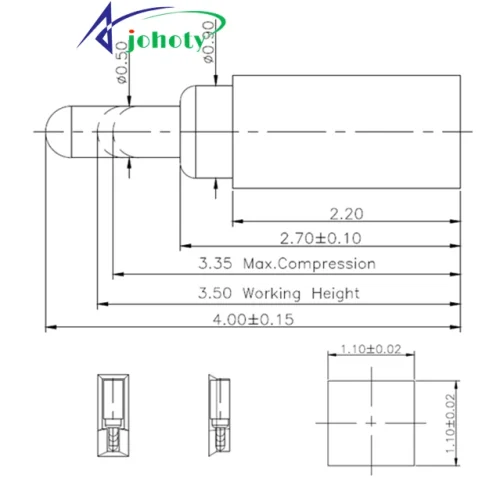
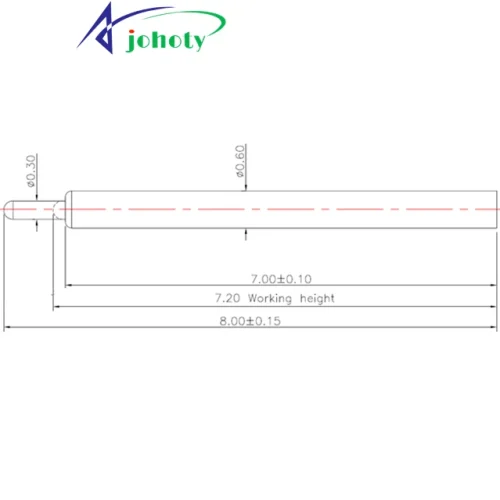
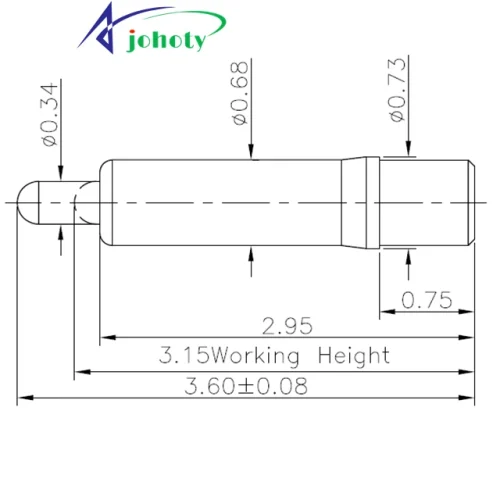
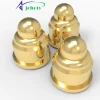
Descriptions of Fine Pitch Pogo Pins
When your design faces the challenge of narrow pitch between 0.80mm and 1.27mm. When traditional connectors cause distortion in high-speed signal transmission. Ordinary pogo pins often fail after 30,000 tests due to wear and increased contact resistance. Johoty fine pitch pogo pins are designed to achieve ≤10mΩ and mechanical lifespan of >200,000 cycles. From prototype testing to final production testing, they can ensure high consistency of data throughout the entire process.
| Items | Vlues | Fine pitch pogo pin solutions |
|---|---|---|
| Minimum pitch | ≥0.80mm | No need to compromise PCB wiring space, directly match next-generation wearable devices with MCM packaging testing interfaces. |
| Available diameter | 0.20mm – 0.80mm | Provide sufficient mechanical stability with minimal board area to solve the problem of probe being too thin and prone to bending. |
| Customization | ±0.015mm head forming tolerance | Support pointed, serrated, and concave cup openings to pierce through the oxide layer, specifically for treating unstable signal contact. |
| Contact resistance | < 20mΩ | Maintain a flat resistance curve throughout the entire working process to ensure that the low-voltage signal is free from clutter distortion. |
| Current capability | 3.0A @ΔT≤30℃ | Realize mixed transmission of power and signal at 0.80mm pitch, solving the problem of thermal accumulation caused by insufficient overcurrent under high-density conditions. |
| High frequency | Impedance matching 50Ω±5Ω @10GHz | For high-speed digital design, provide standard RF performance without worrying about signal reflection. |
| Working life | 10,000~500,000 cycles | By using patented curling and inner wall guidance, the interruption of mass production testing caused by spring jamming is solved. |
| Spring force | 5g ~ 25g (per pogo pin) | Ultra-low and smooth insertion force, protecting the UUT’s golden pad from indentation damage. |
| Stroke | Recommended travel >0.07mm | Clear mechanical allowance guidelines to compensate for accumulated tolerances in modules or PCBA and prevent open contacts. |
Catalogs of Fine Pitch Pogo Pins
Fine pitch pogo pins, customized for high-density PCB testing and connection, solve your RF interference and signal crosstalk anxiety. Johoty optimized the barrel structure to ensure that the spring loaded pin doesn’t shift or get stuck at extremely small pitch.
Ultimate finishing: Johoty uses selective gold-plating for fine pitch signal integrity. Ensure that gold plating on plunger tip is greater than or equal to 30μin. And, its resistance remains stable even after >10,000 insertions, with no loss of signal.
Customized spring lifespan: Fine pitch pogo pins are most afraid of spring force fatigue. Johoty precisely calculates it based on your working height. This can provide sufficient forward force within a very small travel distance. We can achieve a lifespan of 50,000 to 100,000 cycles.
Customization without drawings: If you are still troubled by the uncertainty of fine pitch dimensions? Please send Johoty your PCB layout or Gerber file directly. Johoty will provide you the selection of fine pitch pogo pins within 24 hours to avoid short circuit risks.
Materials and Technologies of Fine Pitch Pogo Pins
At a spacing of 0.35mm or even 0.25mm, any small material or structural defects will be infinitely magnified. Johoty fine pitch pogo pins are not a compromise product that shrinks for the sake of shrinking. We have restructured miniaturization through materials science and precision technology.
Barrel material that suppresses micro deformation from the source:
When the spacing is reduced, the wall thickness of the needle tube is only 0.10mm. Ordinary brass is prone to creep after high insertion times at this scale, resulting in poor contact.
Johoty’s solutions: Fine pitch pogo pins are made of precision copper alloy and beryllium copper. The elastic advantage of BeCu allows the barrel to provide persistent radial clamping force at the microscale. Prevent fine pitch pogo pins from getting stuck or dented due to barrel micro deformation.
Finishing of constructing hard core armor on micro contact surfaces:
The contact force of fine pitch pogo pins is often lower. The ordinary gold plating layer will quickly peel off under micro motion wear, exposing the substrate and causing impedance surge.
Standard version: Nickel base + gold plating (0.75-2.5μm). Johoty’s coating adhesion has been verified by ultrasonic cleaning and does not peel during mass production assembly of consumer electronics.
Ultimate Wear Resistant: For high-frequency testing, Johoty introduces a palladium alloy (Pd) transition layer or DLC coating. Palladium alloy, as a hard barrier layer, can effectively prevent the diffusion of underlying copper and nickel to the gold surface. The DLC coating provides a hardness close to that of diamond. After 200,000 wear tests, the contact resistance slightly decreased due to the self-cleaning effect of the micro movement surface. This is exactly the ideal state of zero maintenance pursued by semiconductor testing sockets.
Applications of Fine Pitch Pogo Pins
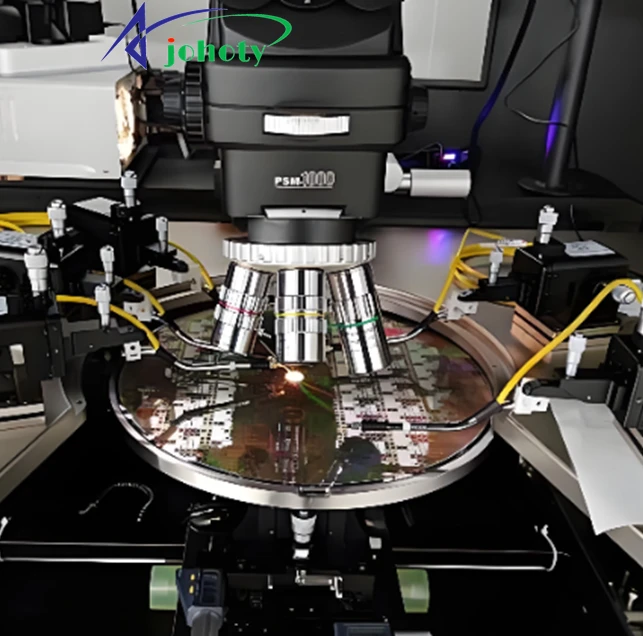
Semiconductor ATE testing:
Challenge: When testing next-generation memory or 5G millimeter wave chips, traditional test probes experience excessive indentation on the solder ball due to lateral force slip. At the same time, the test probe is very prone to jamming, resulting in wafer scrap.
Solutions:
Plunger tip: Using 3-point crown and wedge tip, optimizing the contact angle through FEA. When penetrating the oxide layer of chip solder balls, the indentation depth is precisely controlled within ≤15μm. This can avoid damaging the low-k dielectric layer below.
Lifespan: The thickness of the gold plating layer reaches 50μin, and the spring structure has been optimized by FEA, with a plug-in life of over 500,000 times. Significantly reduce the downtime and pogo pin changing time of ATE machines.
Value: Increases the testing yield of each wafer by 2-3%, directly reducing the cost of customer advanced process flow.
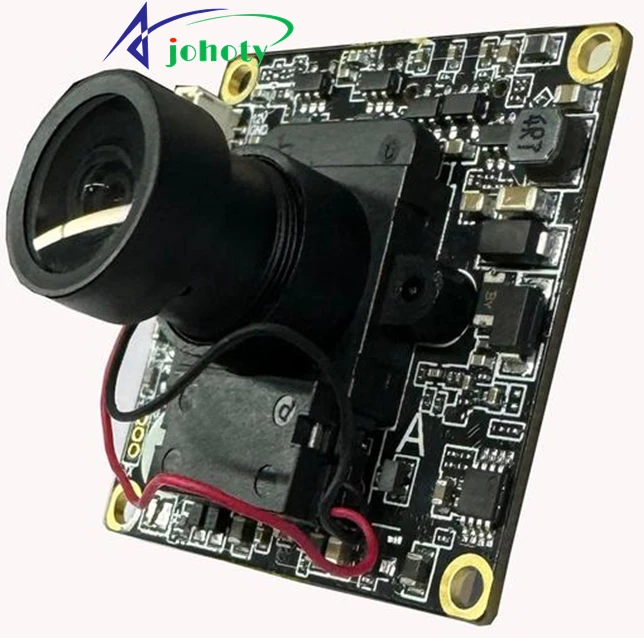
RF front-end module:
Challenge: In the sub-6G and millimeter wave frequency bands, there is severe crosstalk between fine spaced parallel signal pins. Causing impedance mismatch and excessive signal reflection loss.
Solution:
Coaxial design: Johoty provides a GSG three pin coaxial structure, with the signal pin wrapped 360° around the ground pin. Realize a characteristic impedance of 50Ω± 5% @10GHz.
Material: LCP insulator, with a dielectric loss as low as 0.002 and an insertion loss of less than 0.5dB within a 10GHz bandwidth.
Value: You will be able to upgrade the test fixture directly without redesigning the PCB. Improve the phase consistency of your millimeter wave antenna array by 30%.
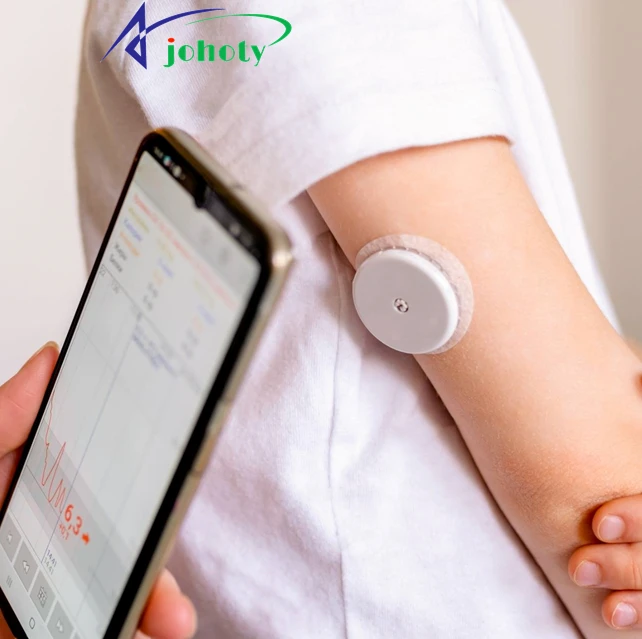
Micro medical devices:
Challenge: Implantable or wearable blood glucose monitoring devices must withstand corrosion from internal fluids. It is even more necessary to achieve charging and data transmission within a space of<2.00mm.
Solution:
Ultra-thin floating: The overall compression height is as low as 1.50mm, and the spring is made of palladium nickel alloy. Johoty can achieve fine pitch pogo pins that are resistant to electrolytic corrosion.
Dynamic sealing: With the use of O-rings or adhesive technology, it can pass the IP68 air tightness test. Our fine pitch pogo pins can withstand sterilization at 121℃.
Value: Help customers’ devices pass FDA’s strict biocompatibility and reliability certification, shorten the time to market.
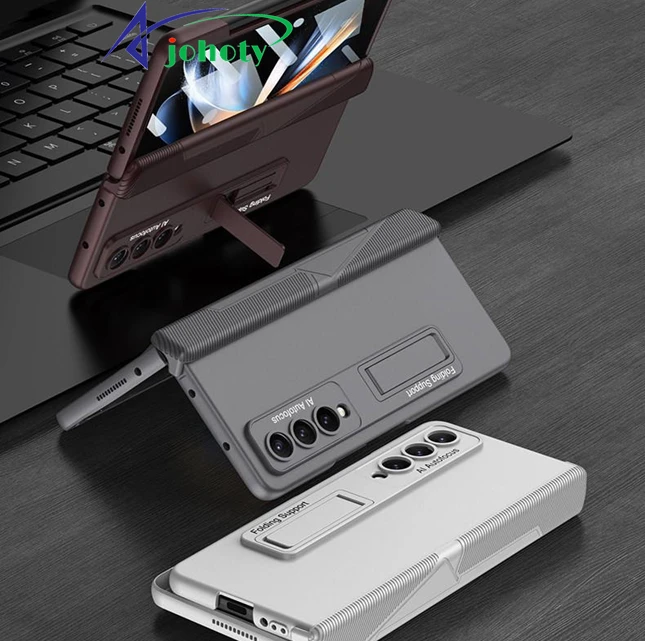
Folding screen phone:
Challenge: The connector at the hinge of the folding screen needs to withstand repeated bending. However, ordinary FPC is prone to fatigue fracture, while traditional pogo pins cannot be inserted due to their large spacing.
Solutions:
Side float: Achieve a horizontal float of ± 0.15mm at a pitch of 0.40mm to compensate for mechanical deviations during folding.
Anti-vibration: Adopting a double reed tube type multi contact. The contact resistance is less than 30mΩ without instantaneous breakage after 100,000 folds and 2 hours of vibration testing.
Value: Providing invisible electrical connections for foldable screens and eliminating wiring difficulties at the hinge.
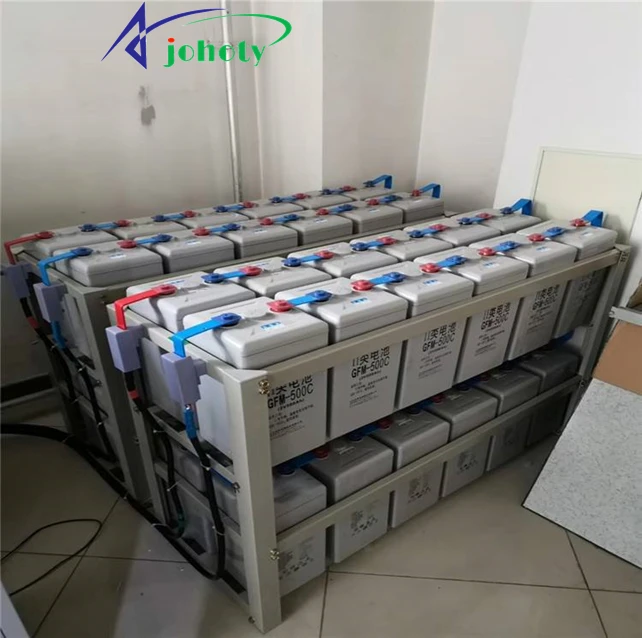
High density BMS:
Challenge: In EV or energy storage battery packs, voltage needs to be collected from the gaps between dozens of battery cells. Slight unevenness in the probe array can lead to short circuits or sampling errors.
Solutions:
Array integration: Provides 1 × N or 2 × N layout, with adjacent pitch accuracy of ± 0.02mm. All fine pitch pogo pins can simultaneously contact the battery electrodes with the same pressure.
High current capability: Johoty fine pitch pogo pins can carry 5A continuous current with a temperature rise of <30℃. Meeting the requirements of active balancing circuits.
Value: The assembly efficiency of battery sampling samples has been improved by 50%. Eliminating the risk of false alarms thermal runaway, or NTF caused by poor contact.

Aerospace module:
Challenge: The solder joints of the onboard black box or satellite module may crack under -55℃~175℃. If PCB thermal expansion coefficient doesn’t match connectors.
Solution:
Compensation design: Johoty can design a fine pitch pogo pin with a flexible eye solder cup at the tail. When the PCB temperature changes, they will produce an axial displacement of 0.10mm without damaging the PCB pads.
Military grade coating: Plunger tip often uses hard gold plating with a nickel base. After 48 hours of salt spray testing, fine pitch pogo pins will not produce corona discharge at high altitude and low pressure.
Value: Johoty fine pitch pogo pins can meet MIL-STD and provide uninterrupted protection for data recording.
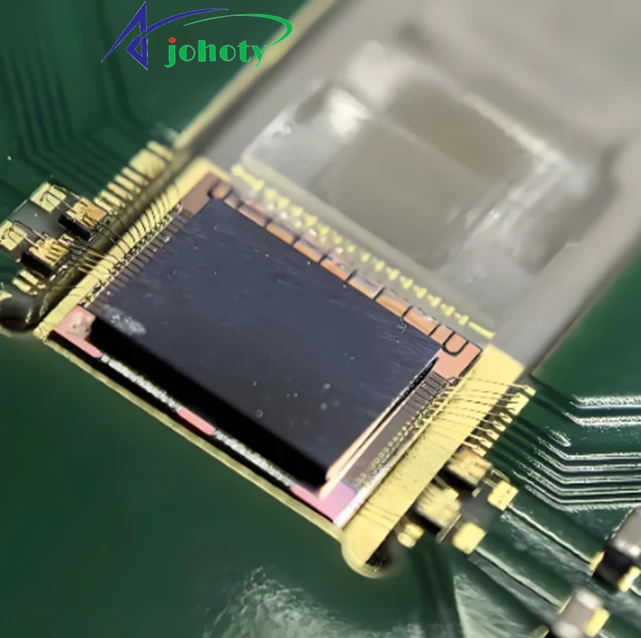
Micro connections inside optical module:
Challenge: Internal space of 800G optical module is already occupied by optical chip, leaving <1.50mm for the electrical interface. They also need to support 56Gbps PAM4 signals.
Solutions:
Ultra-low height: Surface mount SMT pogo pins, with a height of only 1.40mm after welding. The spring stroke is 0.25mm, perfectly adapting to the internal space of the optical module cage.
Signal integrity: By simulating and optimizing the grounding circuit, the return loss is optimized to <-15dB @ 10GHz.
Value: Help optical module manufacturers achieve smooth upgrades from 400G to 800G within standard packaging sizes.

Robot joints with mixed power and signal:
Challenge: Collaborative robot joints require simultaneous transmission of 10A power and encoder signals, and excessive wiring can limit flexibility.
Solutions:
Mixed pin arrangement: Integrate silver plated 10A high current pogo pins and gold-plated high-speed signal pogo pins on the same insulation socket. They have a uniform spacing of 2.00mm.
Anti-torsion design: Barrel adopts a D-type anti-rotation structure. This fine pitch pogo pin can withstand the torque generated when joint rotates ±360°, preventing fatigue of wire solder joints.
Value: Reduce the number of internal connectors in joints by 70%, improving the flexibility and reliability of robot movement.
Quality Control and Certification of Fine Pitch Pogo Pins
For fine pitch pogo pins, regular plug and drop testing is meaningless. The risk of signal interference and physical collapse increases exponentially for every 0.01mm reduction in spacing. All of Johoty’s quality control logic is designed to address your two biggest concerns: momentary breaks and short circuits.
Incoming inspection:
Spectral analyzer: Johoty not only looks at material certificates. We will strictly confirm the ultra-high conductivity and elasticity required for fine pitch pogo pins. Using spectral analysis to determine the purity of beryllium copper and palladium nickel alloys from the source. Impurities are the fundamental cause of signal distortion in fine pitch, and we remove them from the melting stage.
Compliance
RoHS&REACH: Johoty can declare compliance and provide full material disclosure reports. For fine pitch pogo pins, label them as cadmium free and halogen-free to help you easily pass EU environmental inspections.
UL 94 V-0 certification: Johoty uses V-0 grade flame-retardant materials for insulation cores of fine pitch pogo pins. When the current is too high and causes abnormal heating, the material can also extinguish itself to prevent the spread of fire.
Process control:
CCD optical screening: At a pitch of 1.00mm, a 10 micron burr can cause a short circuit between adjacent pins. Johoty’s CCD performs real-time imaging during the assembly process, automatically eliminating any out of tolerance coplanarity or concentricity deviation. We ensure that the landing point of each fine pitch pogo pin on the PCB is as precise as a surgical knife.
Shipment testing:
Fatigue testing: Johoty conducts over 10,000 compression tests on fine pitch pogo pins with short stroke and high rebound force. At the end of its lifespan, the elastic attenuation rate is less than 15%, ensuring the stability of the fine pitch pogo pins for long-term connection.
Salt spray and weather resistance: For outdoor or vehicle mounted devices, Johoty provides a salt spray test report of over 72 hours. Prove that even with slight oxidation on the surface of fine pitch pogo pins, the noble metal coating can still ensure low impedance conductivity.
Contact resistance test: On a simulated high-frequency vibration table, Johoty monitors not static resistance, but dynamic fluctuation values. We guarantee that the resistance change will be less than 10mΩ during the simulation of actual work bumps. This can eliminate your concerns about data loss or screen flickering.
FQA
At a pitch of 1.00mm, signal integrity is indeed a challenge. Johoty often uses coaxial shielding structure or three spring split design for fine pitch pogo pins.
Material selection: We use specialized insulation media to physically isolate the signal pin from the ground pin, effectively suppressing crosstalk.
Short stroke design: For fine pitch applications, Johoty will optimize the compression stroke of the spring to 0.80mm -1.20mm. Shorten the signal path and minimize parasitic inductance and resistance.
Results: You don’t need to worry about signal distortion at high frequencies. Our fine pitch pogo pins have extremely high repeatability consistency in characteristic impedance control.
This is the core mechanical reliability breakthrough of Johoty fine pitch pogo pins.
Precise guiding structure: Johoty adopts multiple step guiding grooves, and fine pitch pogo pins can always maintain vertical motion during compression. The side play of the plunger tip is strictly controlled within ±0.015mm, eliminating the risk of adjacent plunger tips touching.
High hardness material: The plunger tip is made of beryllium copper or hardened tool steel and is treated with gold plating. The puncture force on the micro solder pad can puncture the oxide layer. The Plumger tip will not wear or deform over long-term use.
Tested lifespan: Under rated stroke, the lifespan of Johoty fine pitch pogo pins can reach 50,000-100,000 cycles, and the resistance fluctuation is <50mΩ.
What you mentioned is indeed the biggest challenge for fine pitch pogo pins in mass production. To reduce your overall testing costs, Johoty fine pitch pogo pins offer a complete solution:
Large tolerance installation: Although the spacing is extremely fine, we have designed a unique self-centering floating plate structure. When installing the fixed seat, ±0.05mm installation offset can be absorbed by floating structure of fine pitch pogo pins. This greatly reduces the difficulty of PCB drilling and assembly.
Modular replacement: Johoty provides an integrated modular receptor. When replacing a very small number of fine pitch pogo pins due to accidental damage, you can easily replace them. Simply use a specialized tool to push out from the back.And, replace a single fine pitch pogo pin within 10 seconds without scrapping the entire fixture.
Inventory optimization: Johoty’s plunger and barrel adopt standardized spring design. Fine pitch pogo pins of different lengths may share the same spring components. Help you reduce spare parts inventory pressure and achieve rapid response maintenance.