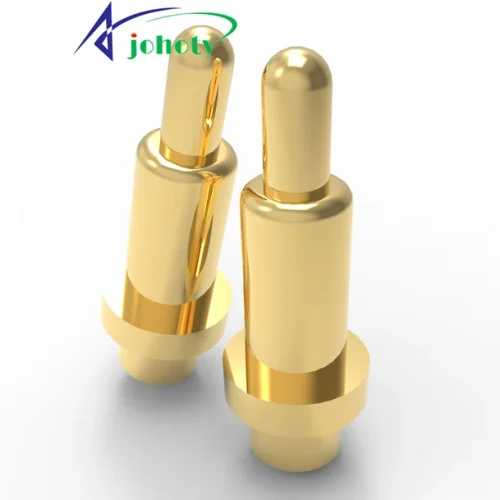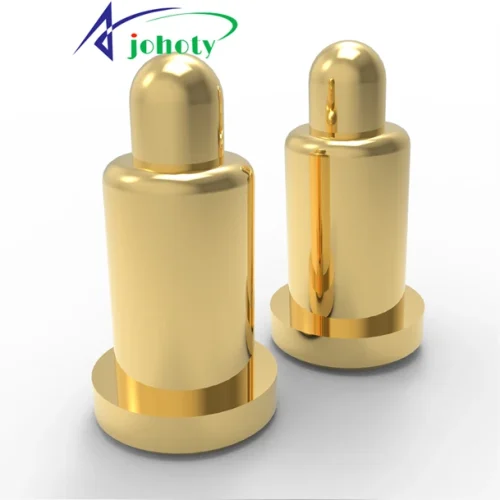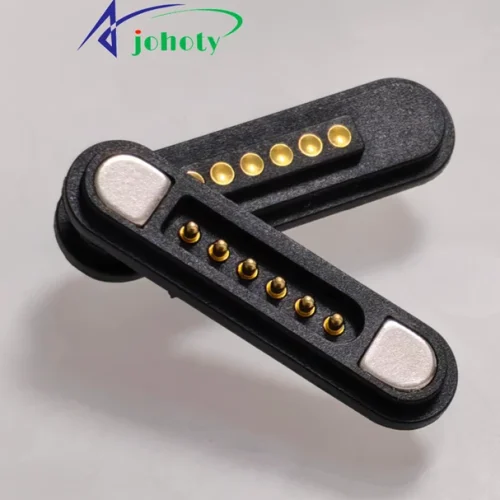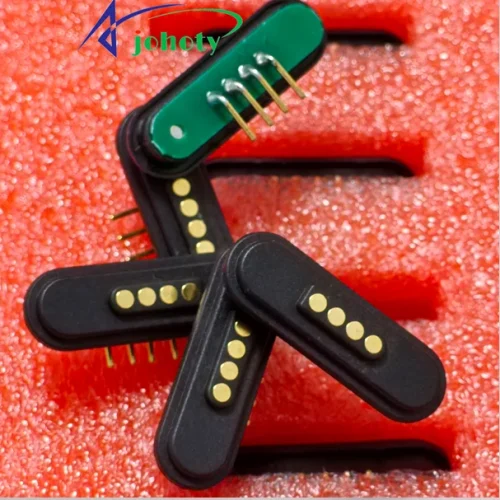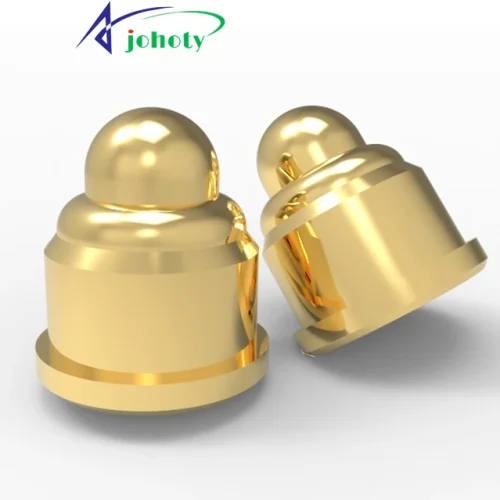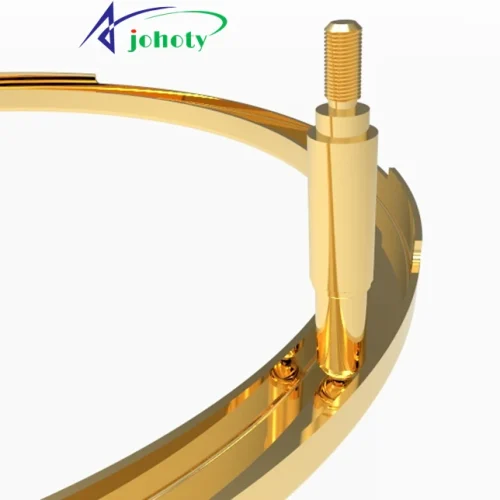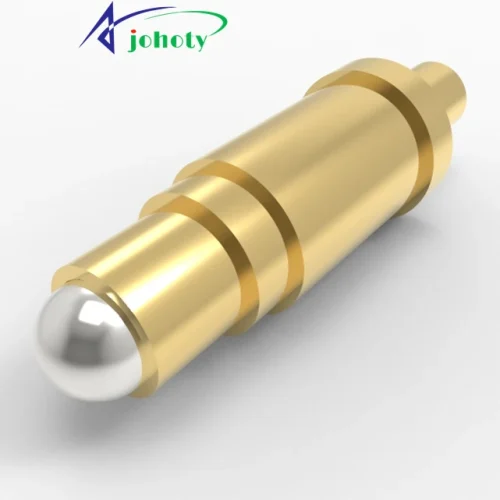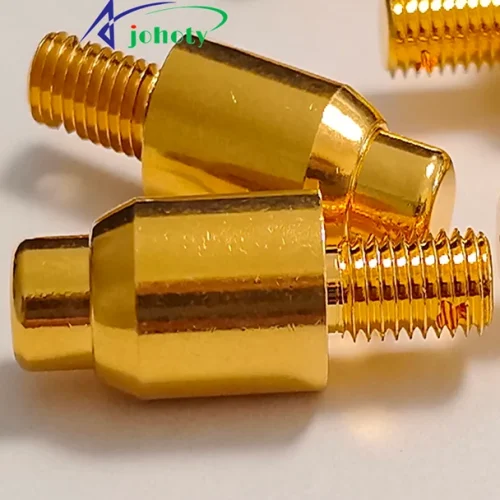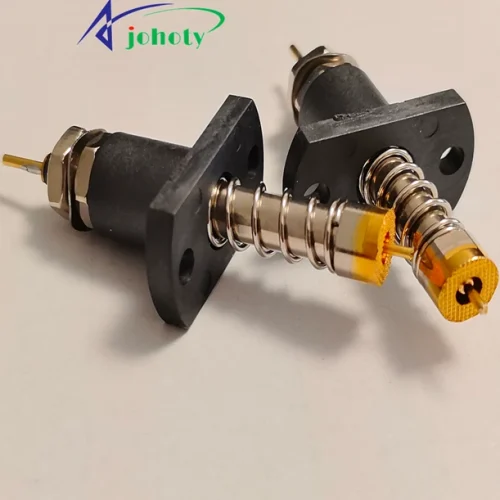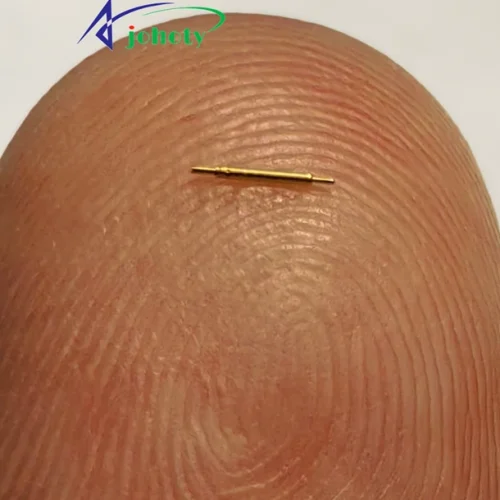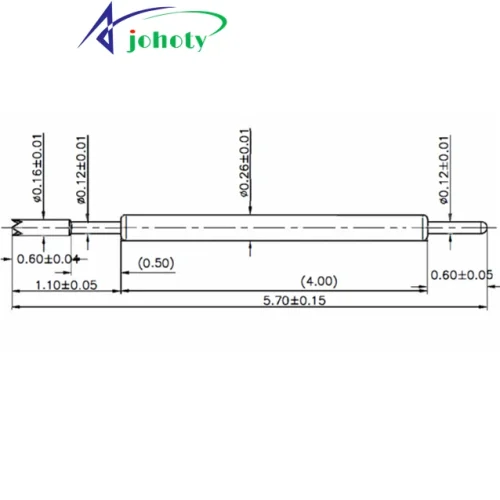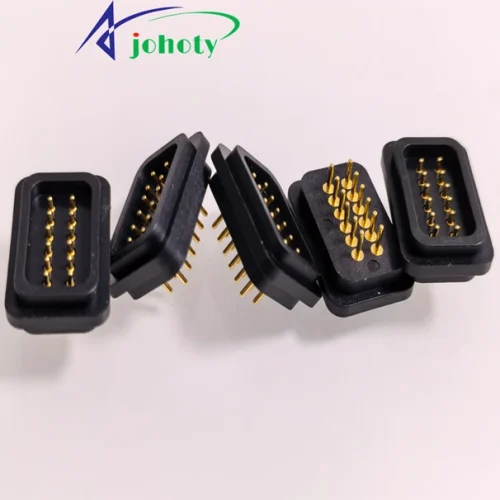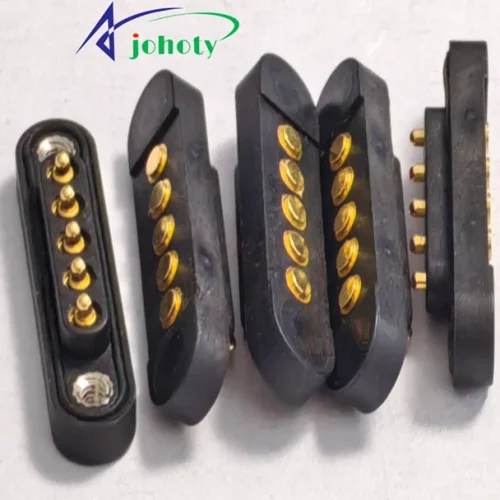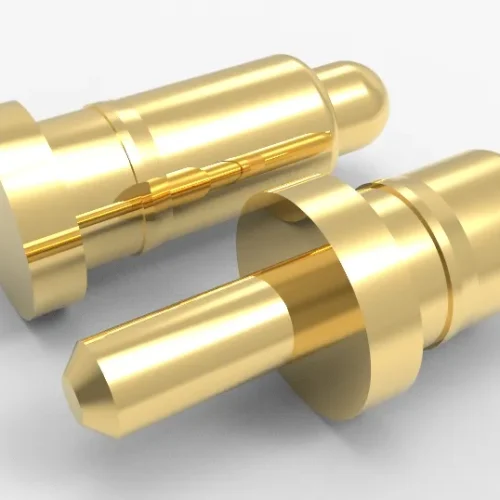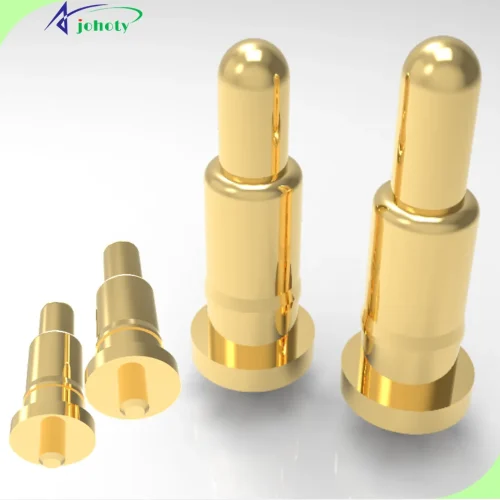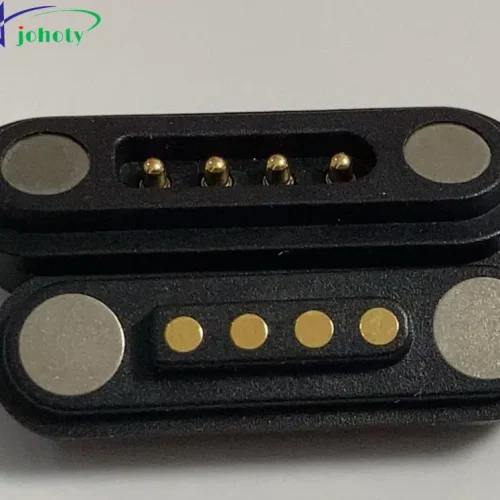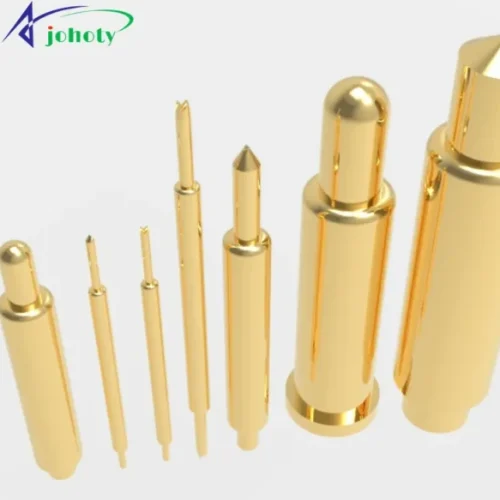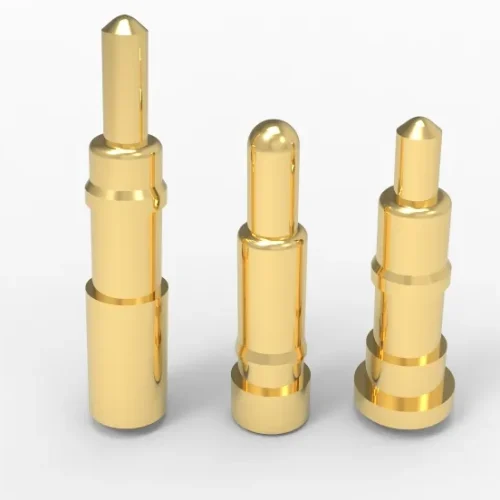


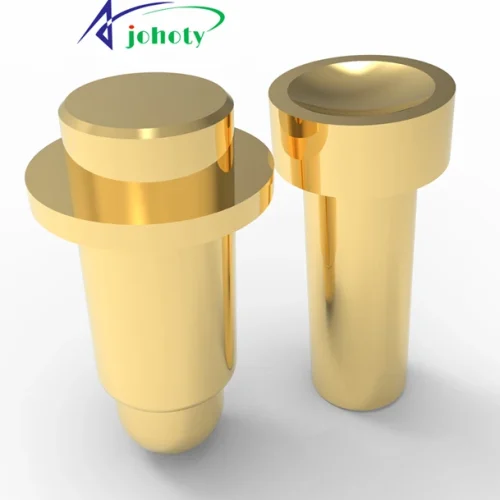
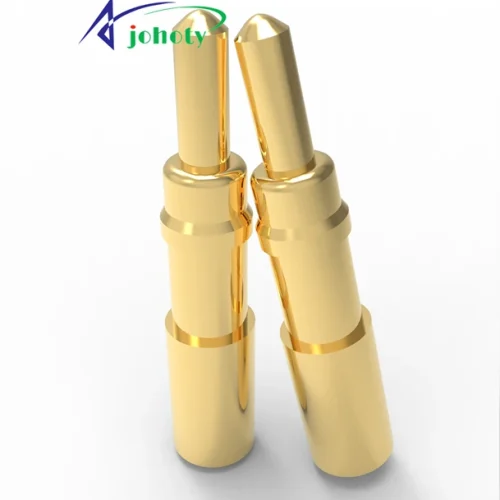
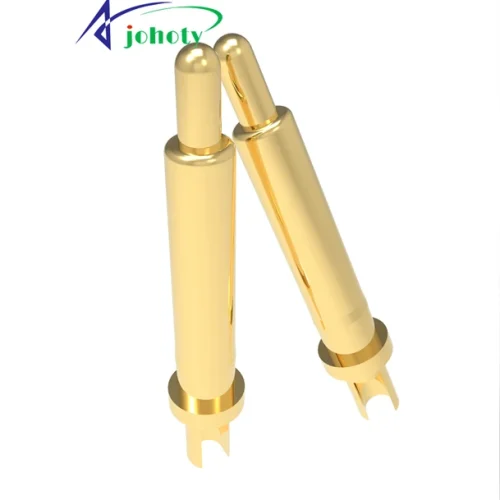
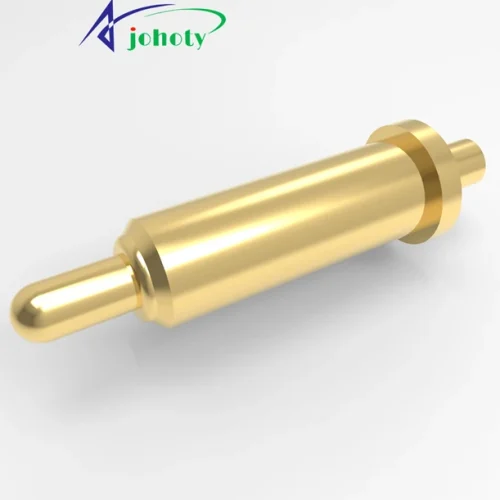

Description of Johoty High Temperature Pogo Pin
| Technical indicators | Standard Pogo Pin (brass) | High Temperature Pogo Pin(Johoty Solutions) | The value of your design |
|---|---|---|---|
| Continuous operating temperature | 85°C – 105°C | 350°C (peak 500°C) | No need for an insulation layer, saving vertical space |
| Spring force attenuation under thermal cycling | Decay by 30% after 5,000 cycles | Decay <8% after 5,000 cycles | Ensure the pass rate of long-term high-temperature aging testing |
| Contact resistance stability | Fluctuations >50mΩ at high temperatures | Stable throughout the entire process at 20mΩ±5mΩ | Avoid signal reflection, especially suitable for high-frequency testing |
| Maximum current-carrying capacity | 10A (accompanied by temperature rise) | 50A (with temperature rise controlled within 30°C) | Can simultaneously transmit power and signals in high temperature environments |
Catalog of Johoty High Temperature Pogo Pin
Reflow Proof Series: The top needs to withstand high reflow soldering temperatures of 260°C or even 300°C to achieve SMT surface mount process. This type of spring loaded pins can keep the internal insulation from melting and the spring force value from decaying. Johoty uses a high-temperature LCP and ceramic hybrid cavity, as well as SWP-B with special heat treatment. They can be directly reflow soldered without the need for secondary manual soldering.
Wide Resistance Stability Series: Many customers require stable contact resistance <20mΩ between -55°C and +500°C. Pogo pins are commonly used in automotive engine compartment sensors and downhole detection equipment. Johoty uses Invar or special alloy to compensate for thermal expansion coefficients. Help clients achieve consistent signals from the Arctic to the desert.
High Temperature and High Current Series: commonly used for battery simulation, high-power charging stations, to solve the problem of pogo pins causing severe self-heating at 10A-50A. Johoty uses SUS631 or Inconel springs, thickened nickel/gold-plated substrates, and composite coatings to control ΔT<30℃. This type of high temperature pogo pins can allow current to pass smoothly and lock in heat transfer.
How Does Johoty Solve Heat Challenges of High Temperature Pogo Pin ?
Johoty sells standard pogo pins and also provides material and structural solutions for high-temperature failure:
Raw Materials:
In the plunger of high temperature pogo pin, heat is the killer of spring force. Ordinary phosphor bronze and brass will rapidly deform at high temperatures, causing a decrease in elasticity and turning pogo pins into dead pins.
Barrel raw materials:
- Johoty abandoned conventional easy cutting brass or phosphor bronze. We use high-performance Spinodal alloy C72900 or hardened beryllium copper to make barrels and springs. Under continuous thermal shock 350°C~500°C, we can control <5% stress relaxation rate of barrel and spring.
- Compared to the industry’s 15% -20% decline rate, <5% is a significant improvement. In the last 10 minutes when your device reaches 350°C, standard pogo pins have already softened. However, the plunger tip of Johoty high temperature pogo pin still punctures the oxide layer with positive pressure.
- Coating: High temperature will accelerate the diffusion of metal atoms. If the underlying nickel penetrates gold layer and oxidizes on the surface at high temperature, contact resistance will instantly soar.
Coating barrier:
High temperature will accelerate the diffusion of metal atoms. If underlying nickel penetrates gold layer and oxidizes on the surface at 350°C, contact resistance will instantly soar.
Middle nickel layer:
Johoty can control the thickness within the gold of 1.27μm to 3.00μm. This is not a casual electroplating, but a calculated fortress. Our high temperature pogo pin can’t penetrate copper/zinc atoms during its high-temperature lifecycle.
Surface gold function:
According to your signal level, Johoty offers selective gold plating or hard gold coating. This is about conductivity, maintaining surface chemical inertness for high temperature pogo pin to prevent oxide film formation.
Insulator: For high temperature pogo pins that require insulation, Johoty will use PEEK or ceramic filled LCP. Under high temperature and vacuum conditions, there isn’t gas release, carbonization, and no pollution to your precision testing equipment.
Mechanical design:
Even an expansion of one thousandth of a millimeter can cause metal to expand. In a fit gap of several tens of microns, it can cause the plunger to jam or wear the inner hole.
Gap control: Johoty has abandoned the traditional equal gap design. Our engineers calculate the reverse thermal expansion allowance based on the different CTEs of plunger and barrel. At room temperature, you may feel that the gap between Johoty high temperature pogo pins is slightly larger. But when the temperature rises to ≥350°C, these gaps are perfectly filled by thermal expansion. This ensures low contact resistance and smooth sliding of the plunger, never getting stuck.
Double edged groove structure:
- Anti oxidative mechanical scratching: Johoty has designed a unique multi-point slotted plunger tip for the easily generated oxide film at high temperatures.
- When the plunger tip contacts the target, tiny edges and corners will generate extremely high contact pressure. By physical scraping, the plunger tip can puncture the oxide layer on the surface of the target pad.
- Under high temperature vibration, this structure can generate self-cleaning effect through micro motion. Johoty high temperature pogo pin ensures complete signal transmission and prevents momentary interruptions.
Applications of Johoty High Temperature Pogo Pin
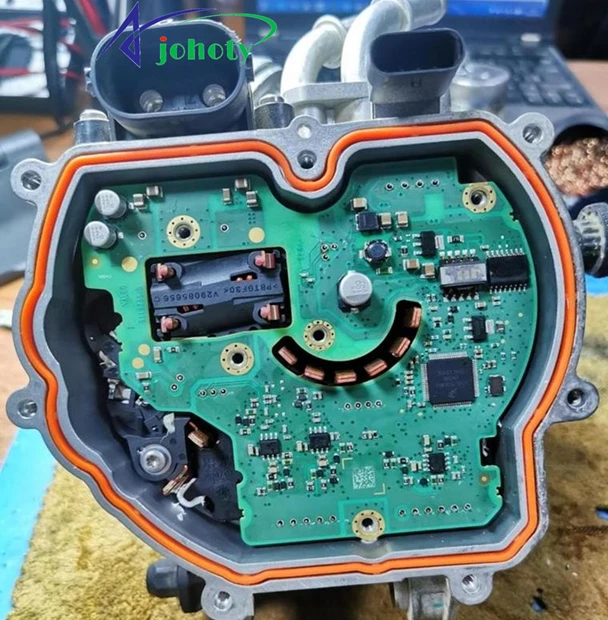
Miniaturization of turbocharger sensors in automotive:
Challenges: German Tier 1 supplier needs to arrange 6 independent lines within a circular sensor space with diameter of only 8.00mm. The installation point is directly adjacent to the 180°C turbocharger housing. The traditional wire harness welding is not only bulky, but also prone to detachment of heat-resistant coatings.
Johoty solutions: Provides dual row micro high temperature pogo pin with a pitch of 1.50mm. High temperature resistant LCP plastic and composite rhodium ruthenium plating, palladium plating process. Vertical conduction of signal transmission has been achieved in a very small space.
Results: The installation height was reduced by 60%, successfully replacing manual welding of wire harnesses. Johoty high temperature pogo pin has passed a durability test under continuous 2,000 hours of dynamic temperature cycling. So far, over 500,000 pieces have been mass-produced.

Oil drilling maintains zero-error-rate at 175°C and severe impact:
Challenges: During deep well operations, downhole temperature can reach 175°C for drilling measurement tool in a well-known Norwegian company. Under high impact and vibration, traditional connectors often experience instantaneous breakage, resulting in loss of geological data.
Johoty Solutions: Customized reinforced SUS631 spring filled with specialized high-temperature long-life lubricant. The material does not evaporate or carbonize at extreme temperatures.
Results: In rigorous random vibration testing, the high temperature pogo pin connector maintained stable electrical conductivity. The bit error rate has been reduced to 0, and data integrity has been dramatically improved.

Flame resistance pressure testing of aircraft engines:
Challenges: A US airline needs to design testing interfaces for sensors inside the engine compartment. The region has been experiencing 200°C high temperatures for a long time. It also requires the connector to maintain performance when exposed to aviation fuel and hydraulic oil.
Johoty Solutions: We designed an IP68 high temperature pogo pin connector using Inconel Spring and C72900. In high-temperature oil contaminated environments, Johoty can control the attenuation of elasticity within 1%.
Results: After working continuously for 5,000 hours at 200°C, spring force attenuation was <5%. Fully meet the FOD control requirements and become the designated testing interface for this engine model.
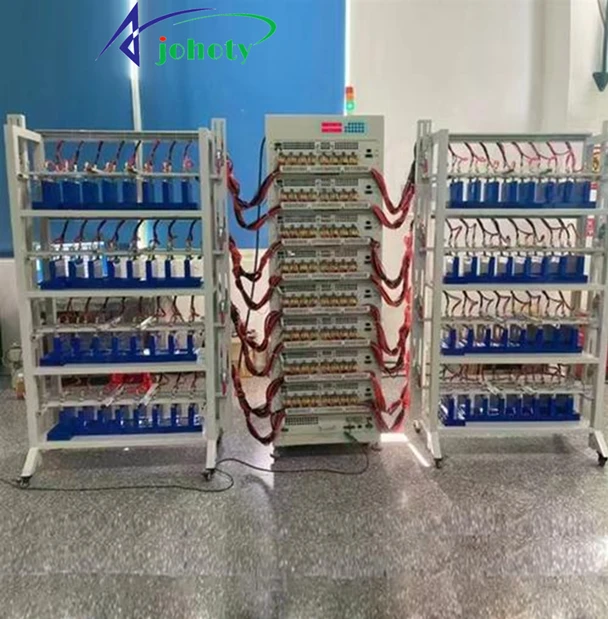
Docking of high-temperature battery aging cabinets for industrial automation:
Challenges: A European lithium battery equipment manufacturer experienced in battery pole temperature increase and severe surface oxidation during battery aging testing. Ordinary pogo pins experience a sharp increase in contact resistance after frequent connections, leading to frequent burnout.
Johoty Solutions: Developing a high temperature pogo pin connector with multi-layer rhodium ruthenium palladium nickel and gold plating. The plunger tip features a sharp 3-pont crown that pierces through the oxide film.
Result: Contact resistance remains stable below 5mΩ, and increasing service life from 5,000 insertions to >50,000 insertions. Reduce equipment downtime maintenance time by 70%.
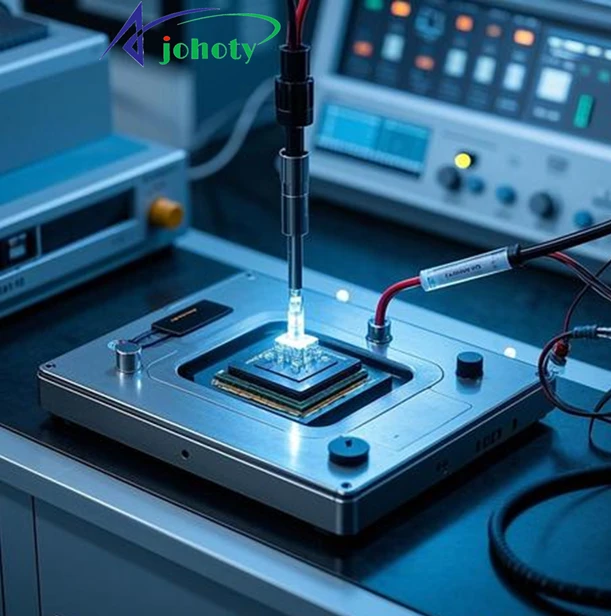
Precise pressure control in semiconductor aging furnace:
Challenges: A semiconductor manufacturer requires a testing temperature of 150°C for high-temperature aging testing of automotive grade chips. This can’t match for the thermal expansion coefficient of ordinary spring loaded pin materials. The plunger tip causes excessive indentation on the chip pins at high temperatures, resulting in damage to expensive chips.
Johoty Solutions: We matched thermal expansion coefficient of DUT materials and customize high temperature pogo pin connectors with low and constant elasticity. Using SUS631 springs with beryllium copper, we maintain at 5% for the pressure fluctuation at <200°C.
Results: The consistency of plunger tip mark depth has been improved to within ±5μm, resulting in a 12% increase in chip yield. Completely eliminates the problem of non-contact caused by thermal deformation of the probe card.

Infrared night vision device connection for military armored vehicles:
Challenges: This is an infrared thermal imager in a new tank developed by a European defense contractor. It needs to ensure a stable connection between power and signal in nighttime and high-temperature desert environments. The internal temperature of the device is soaring and requires extremely low insertion and extraction force to adapt to the precise optical adjustment mechanism.
Johoty Solutions: Johoty provides a high temperature pogo pin connector with 20gf spring force. While ensuring high temperature resistance, the jolting sensation during insertion is eliminated through precision machining.
Results: Under thermal shock from -40°C to +165°C, there is zero attenuation in signal transmission. And controlling insertion and removal force <20gf for high temperature pogo pin connector. Perfectly protecting the alignment accuracy of precision optical components.

Simplification of wiring harnesses for heavy machinery and construction vehicles:
Challenges: A Swedish heavy machinery manufacturer attempts to simplify the complex wiring around the engine. The multi-point sensors that were originally connected using fly wires need blind connection under high temperature and high oil pollution.
Johoty Solutions: Johoty designed a high temperature pogo pin connector that combines high current and signal. Integrated 30A per pin power supply and signal feedback function, using a floating structure to compensate for installation tolerances.
Result: Customer’s assembly time has been reduced by 80%, completely eliminating the risk of short circuits caused by wire harness wear. Achieved IP68 protection level under continuous vibration at 125°C.

Sealing challenge of hydrogen fuel cells:
Challenges: Nordic company needs to work in sulfur in 85°C~105°C for voltage monitoring of fuel cell stacks. The material of ordinary pogo pins or connectors will corrode rapidly in this environment.
Johoty Solutions: Johoty uses corrosion-resistant nickel-based alloys as substrates and a composite coating of palladium platinum and gold plating. In acidic high-temperature environments, our high temperature pogo pin can maintain <20mΩ contact resistance.
Results: Continuous operation in corrosive gas simulating the working environment of the fuel cell stack for 3,000 hours. Our client didn’t find any upward trend in contact resistance. Johoty assisted the client in ensuring the stability and safety of the fuel cell system during long-term operation.
What Parameters Are Needed to Obtain an Accurate High Temperature Pogo Pin ?
Define your thermodynamic parameters:
- What is the continuous working temperature? For example, +250 °C for 30 minutes, or peak +300°C?
- What is the current load at high temperature? For example, in an environment of 200°C, is it necessary to continuously pass 5A current or instantaneously pass 10A current?
- Is there a thermal cycle shock? For example, the number of cycles from -40°C to +150°C?
Locking the mechanical structure of “thermal stability”:
- What is the total required spring force? The attenuation of elasticity under high temperature can’t be ignored. Please inform Johoty of the required weight for the working height.
- What is the working stroke? Where is the work point located on the total itinerary? Johoty needs to calculate the thermal expansion margin.
- Do you have any high-end or special requirements for the coating? Do you need a nickel base and a thick gold coating to prevent high-temperature oxidation? Do we still need palladium/silver plating to cope with special high-temperature environments?
Confirm if your high temperature is accompanied by other extreme environments:
- Is the working environment vacuum? Under high temperature in vacuum, ordinary materials will release gas, leading to pollution.
- Is there a corrosive gas or medium present? High temperature will surely accelerate chemical corrosion in these conditions.
FAQ
At high temperatures, ordinary pogo pins will experience impedance drift due to coating oxidation and substrate stress relaxation. Johoty’s unique solution for high temperature pogo pin.
Bottom layer of material: Johoty uses high-performance beryllium copper or C72900 substrate that has undergone special heat treatment, with an elastic decay temperature much higher than 250°C. This type of spring can still provide stable elasticity at a sustained temperature of 350°C, without instantaneous breakage caused by a decrease in elasticity.
Coating process: Johoy abandons the standard soldering process and adopts multi-layer gradient Ni-Pd Au Pt Ru Rh or selective flash gold. This barrier can effectively block the diffusion of base metal to the surface at a sustained temperature of 350℃. Thus, the contact resistance is strictly controlled within 30mΩ to ensure the integrity of the signal.
This is the main reason why many high temperature pogo pins pass laboratory tests but fail after installation. Johoty’s solution strategy is mainly based on thermal matching and tolerance design:
CTE matching: Johoty rigorously calculates the expansion and contraction ratios under high and low temperature cycles when designing barrel, plunger, and springs. We will reserve reasonable axial and radial clearances for these three sub components. This can effectively avoid jamming at high temperatures due to significant differences in material expansion coefficients. Or permanent deformation may occur during cooling.
Anti thermal shock structure: The barrel closure adopts a smooth inner wall design without burrs. The spring always moves along the axis during the reciprocating motion of thermal expansion and contraction, without deviation or breakage. Johoty also considers your actual operation and possible over stroke compression, and uses high hardness SUS316F to increase the hardness of the needle tube. In short, our high temperature pogo pin is lubricated at high temperatures, not tight.
This is an extremely precise challenge that many Johoty’s customers have asked us about. After reflow soldering, ordinary pogo pins may cause customers to worry about coating diffusion, rough texture, or increased resistance. Johoty’s high temperature pogo pin has been deeply customized for this type of challenge as follows:
Dry lubrication technology: Johoty doesn’t use any grease inside our high temperature pogo pin that will carbonize or evaporate at high temperatures. Instead, we coated a very thin, lubricating composite coating on the plunger surface. Our design purpose is to ensure that our high temperature pogo pin remains smooth even in an oil-free state.
Reflow resistant coating: Johoty has designed a thick gold and nickel barrier layer for reflow soldering at 260°C. Thick gold layer can protect contact interface from oxidation at 260°C, 350°C, even 500°C. The dense nickel layer below acts as a hard armor, preventing copper ions from migrating towards the gold surface. This ensures that your high temperature pogo pin remains shiny and elastic even after soldering is completed.
Full process verification: Johoty conducts 23 tests on each batch of high temperature pogo pin before leaving Johoty. We need to test the performance and randomly inspect plunger pulling force and dynamic contact resistance after reflow soldering curve. What Johoty has delivered to you is a qualified high temperature pogo pin, and a reliable connection solution. This has undergone the baptism of overheating simulation.