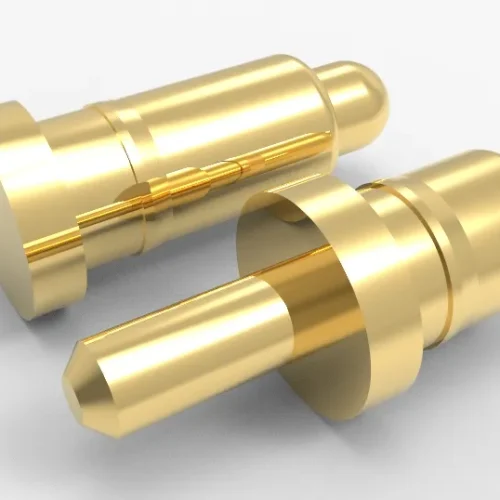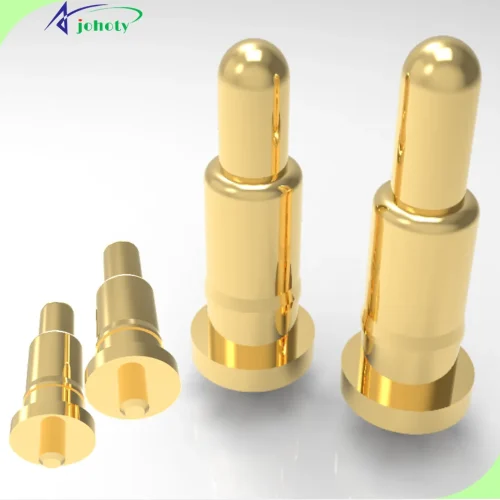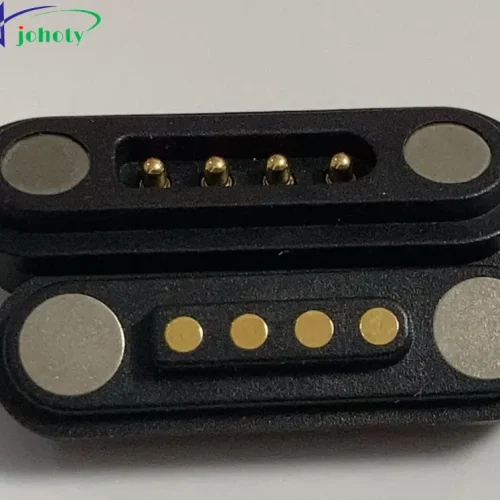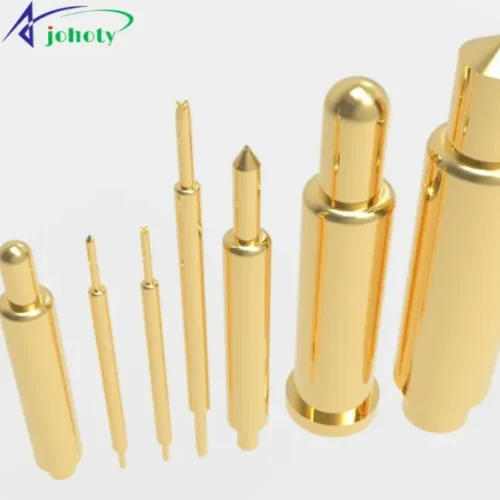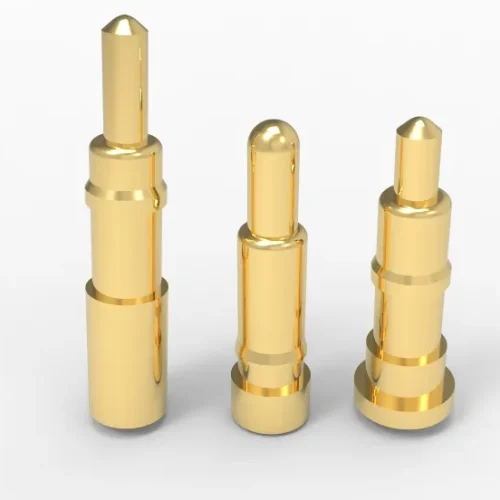
Spring Loaded Pogo Pins, Zero Failures. Custom Male|Female Tips Solve Wobble|Wear. Johoty Guarantees Precision, Eliminates Costly Downtime.
Introduction: Can you tolerate the unreliability of traditional connectors when every connection of spring loaded pogo pins provides a stable connection?
In the field of R&D and high-end manufacturing, minor faults in connectors can result in millions of losses. The shaking and wear of traditional spring needles are invisible killers. Johoty redefines spring loaded pogo pins. We convert instability into absolute accuracy. Keep your device at its original performance after 10,000 of connections. The following are solutions specially prepared for you to challenge your limits.

How axial shaking of spring loaded pogo pins can damage device accuracy?
Axial shaking of 0.5 degrees is sufficient to reduce the test yield by 12%. When precision instruments are docked, small deviations that are not visible to the naked eye can transmit erroneous signals. Engineers were forced to add redundant calibration during testing, which directly led to an 18% decrease in production efficiency. More seriously, long-term shaking can erode the gold plating layer, causing the resistance value to fluctuate by more than 8% after 3,000 cycles.
Johoty uses a 3-track spiral contact to control axial offset within 0.05 degrees. We maintained a stable contact impedance below 15mΩ by combining SUS316L plunger with a ruthenium plating layer. This structure is similar to the balance principle of aerospace grade gyroscopes, with no signal attenuation during 20,000 vibration tests.
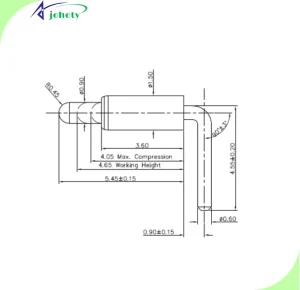
Johoty’s spring loaded pogo pins can avoid PCB micro cracks caused by traditional pogo pin radial stress.
When a standard pogo pin is subjected to lateral force compression, a radial load of 2.5N can cause micro-cracks in the solder joint. These cracks gradually propagate during temperature cycling, ultimately leading to a 22% increase in failure rate in environments ranging from -40℃ to 85℃. Many manufacturers attempt to thicken the coating to compensate, but this will result in a 35% decrease in elasticity.
Johoty has developed a floating plunger that allows for adaptive deflection within a range of 1.20mm. At the same time, maintain the center contact point in vertical alignment at all times. We use beryllium copper alloy or SUS631 springs and segmented guide sleeves to distribute radial stress throughout the entire mounting seat. Actual testing has shown that the design has not experienced solder fatigue after 50,000 diagonal insertions.
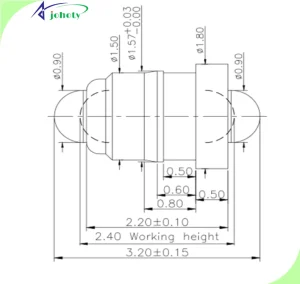
Spring loaded pogo pins address the issue of maintaining integrity in 1GHz or 10GHz high-frequency signals.
When the signal frequency exceeds 6GHz, the parasitic capacitance of traditional spring pins can cause a rise time delay of 23%. RF engineers have to add matching networks in circuit design. This not only increases the cost by $1.7 per channel, but also introduces additional noise sources.
Johoty controls parasitic capacitance below 0.8Pf through air dielectric isolation and grounding ring design. Our four-layer shielding structure results in a return loss of better than -35dB at 10GHz. This design originates from the coplanar waveguide technology in microwave communication, with an error rate of less than 10e-12 in 256 channel parallel transmission.

The material of spring loaded pogo pins doesn’t degrade or performance dropping in extreme environments.
High temperature environment will accelerate the elastic attenuation of ordinary pogo pins. After working continuously at 125℃ for 200 hours, the contact pressure of the traditional spring loaded pin decreased by 42%. The problem of venting in a vacuum environment can contaminate optical components.
Johoty uses Elgiloy and Inconel as spring materials. After 1,000 hours of testing at 150℃, the elasticity retention rate remains above 97%. Our unique injection molding technology achieves a sealed coating that controls the gas release rate at 5 × 10E-11 Torr · L/s. This value is very strict and suitable for semiconductor manufacturing, high-precision instruments, and space applications.
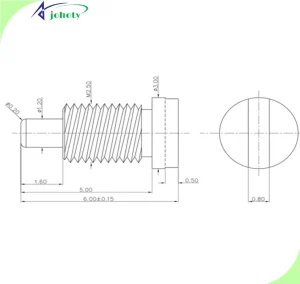
Miniature spring loaded pogo pins solve your power transmission bottleneck
When the diameter of the pogo pin is reduced to 0.80mm, traditional designs can only carry 1.5 amperes of current. This forces designers to increase the number of parallel connections, occupying valuable space. The key to these high-power pogo pins lies in the implementation of materials and design.
Johoty and our clients have tried to break through the physical limits through liquid cooling channel design. Achieve a continuous current of 8.0 amperes within a diameter of 0.75mm. We use silver graphite composite plunger tip material, with a thermal conductivity of 420W/mK, which is 1.6 times that of pure silver. The micro eddy current heat dissipation structure controls the temperature rise below 28℃/ampere. Johoty’s spring loaded pogo pin has increased their power density by 3.8 times compared to traditional designs.
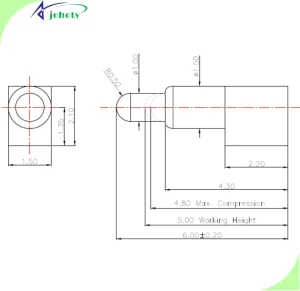
Johoty’s spring loaded pogo pins can solve the failure caused by contact interface oxidation
After the wear of the gold plating layer, the oxidation of the substrate will increase the contact resistance by 15 times after 300 insertions. In the medical environment, sulfide corrosion under chemical conditions is more likely to cause faults to occur earlier.
Johoty has reliable composite coating development technology and can use diamond doped coatings. Under standard 50gf contact pressure, the wear rate is only 1/9 of traditional gold plating. We maintain the integrity of the oil film through a μm groove design, and extend the salt spray test pass time to 2,000 hours. This is similar to the self-repair principle of human joint fluid, where spring loaded pogo pin can maintain stable contact in corrosive environments.
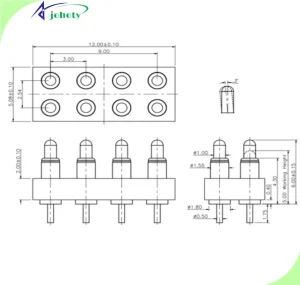
Johoty’s process can eliminate the accumulation of coplanarity errors in multiple rows of spring loaded pogo pins
When using a 64 pin array, a coplanarity error of 0.05mm can cause 8 contacts to be suspended. The traditional solution is to increase spring stroke compensation, but this will reduce the natural frequency by 27%.
Johoty uses semiconductor grade grinding technology to control the coplanarity of the entire array within 0.01 millimeters. Our unique matrix stress relief structure allows each pogo pin to float independently while maintaining overall stiffness without loss. The actual measurement shows that the synchronization error of the 256 spring loaded pogo pins array is less than 0.003 millimeters at a stroke of 1.50 millimeters.
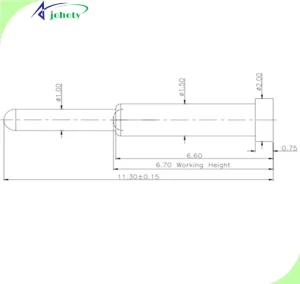
Life prediction and preventive maintenance of spring loaded pogo pins
Without reliable lifespan data, users can only adopt a fixed cycle replacement strategy. This results in replacing 48% of components when spring loaded pogo pin is still usable.
Johoty can assist you in embedding lifespan calibration chips in each batch of spring loaded pogo pins. Accurately predict the remaining service life by monitoring the rate of change in contact resistance. The digital twin system we have established can simulate actual use, and the accuracy of your maintenance plan can be improved to 94%. This system has helped customers reduce unexpected downtime by 62% due to spring loaded pogo pins.
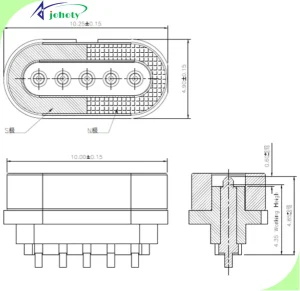
Conclusion: While your competitors are still paying the price for spring loaded pogo pins failures, you have mastered the ultimate solutions
Johoty’s spring loaded pogo pins are redefining industry standards. From μm positioning to GHz transmission, from deep space environment to biological body. We make spring loaded pogo pins a model of reliability for you. The next revolutionary device you are about to launch is worth having this kind of connectivity guarantee. Please contact Johoty’s CFT team immediately so that we can customize a personalized connectivity solution for you.