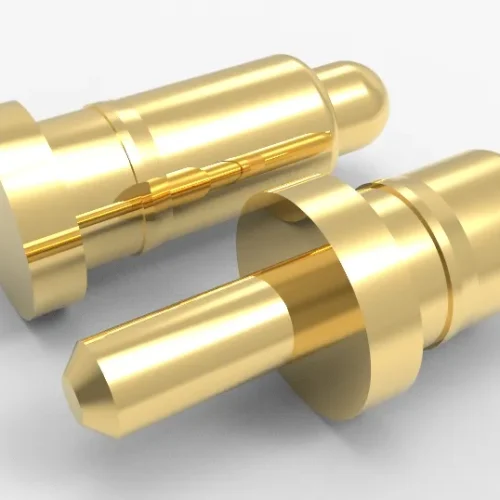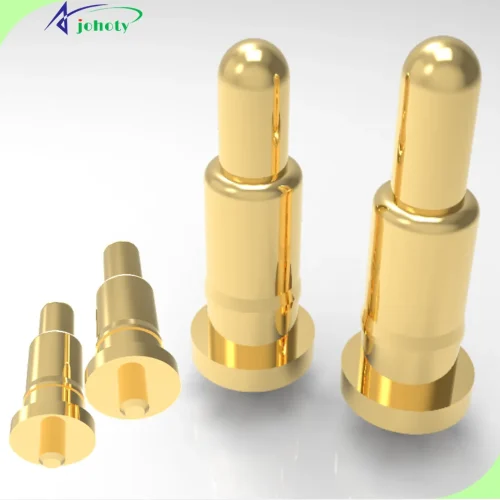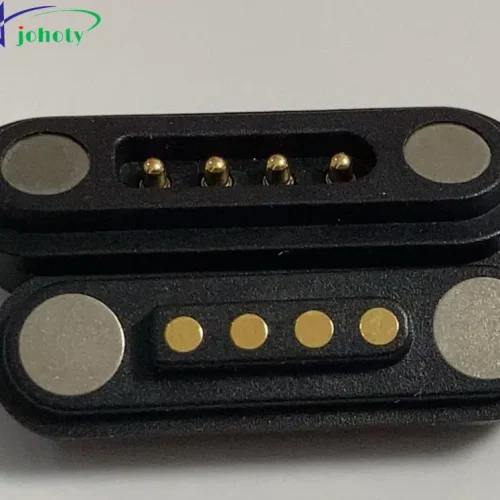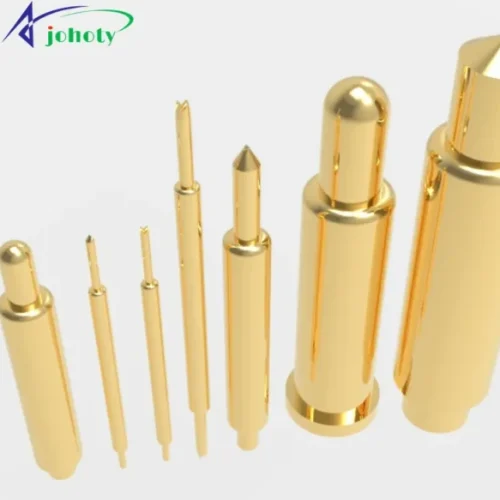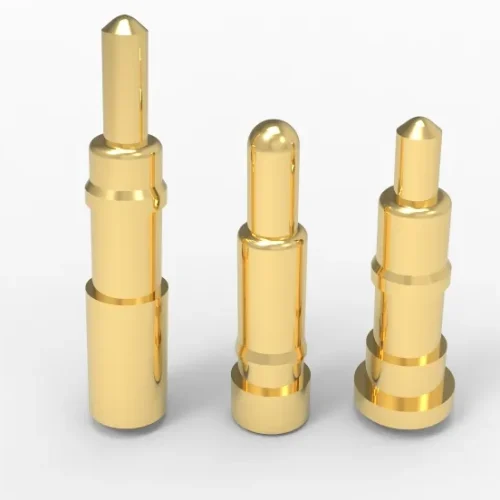
Double Ended Pogo Pin Connector delivers Reliable Performance in Low-profile PCB designs, Consistent Connection, Durability, High Precision.
Introduction: Why is connectivity becoming a key bottleneck in RF design?
Double ended pogo pin connector is recognized by European and American customers for its outstanding performance. In traditional high-speed PCB design, connectors are often regarded as accessories. It can work in 5G RF, millimeter wave radar, aerospace communication equipment, and high speed server applications. However, traditional connectors often become the core bottleneck for signal integrity, power supply, and system reliability. Under the trend of low profile design, traditional spring loaded pin or single ended connector frequently experiences chain failures. Due to mechanical interference, unstable contact, and poor electrical consistency.
Johoty will analyze why double ended pogo pin connector has become a low-profile RF high-speed PCB design for you? In depth analysis of why it has become an irreplaceable precision connection solution? You will learn about its electrical performance, mechanical stability, micrometer-level precision, and long-term reliability. Simultaneously knowing its practical application and third-party testing data.

Why is double ended pogo pin connector not simply symmetrical, but an upgrade to structural rigidity?
The double ended pogo pin connector is different from traditional spring loaded pins with single-sided contact. Its unique bidirectional compression structure is often applied in RF high-speed signal transmission. There are 3 key structural designs worth paying attention to:
- Axial symmetric spring mechanism brings more uniform contact pressure.
- Low insertion force (<1.2N) and high contact stability coexist to avoid damage to the board surface.
- Linear displacement elastic control within ± 0.05 mm, achieving repeated fit in millimeter level stacking space.
Johoty can customize double ended pogo pin connectors that meet customer requirements. After 50,000 compressions, the contact resistance changes by less than 10%. It can meet high-frequency repeated plugging requirements under IP67 sealing.
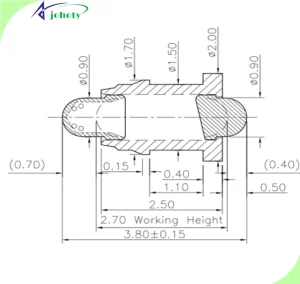
How can double ended pogo pin connectors avoid signal distortion in high-speed RF PCBs?
RF signals are most afraid of two types of problems: impedance discontinuity and near-end crosstalk. Johoty assisted clients in simulating the impact of different connectors on high-speed signals in 60GHz frequency band in laboratory. Results showed that:
- In the high-speed path using the double ended pogo pin connector, the S11 reflection coefficient is always <-15dB.
- The signal eye diagram maintains a window width of>0.7UI at a rate of 12Gbps.
- VSWR remains between 1.18 and 1.22, which is better than the industry standard of 1.35.
In addition, it has a unique dual-end docking structure and gold-plated contacts made of 5μm hard gold, with an internal resistance of 10mΩ. It can continuously ensure electrical stability in vibration environments ranging from -40℃ to +125℃. It can truly be applied to aerospace, high-frequency radar systems, etc.
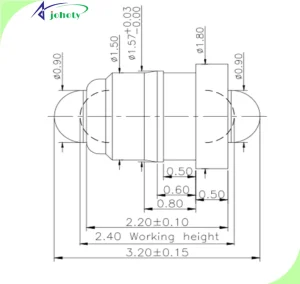
How does the low profile of double ended pogo pin connector help with device light weighting and stacked layout?
In 5G communication modules and millimeter wave antenna modules, PCB thickness is often limited to below 1.20mm. At the same time, 2-4 layers of small daughter boards need to be stacked. Traditional connection methods often experience short circuits or compression due to insufficient vertical space.
Johoty has developed a 3.20mm double ended pogo pin connector for this trend, which achieves:
- Total height is less than 3.50mm.
- Adjustable travel range reaches ≥0.10mm, meeting assembly tolerance of ±0.05mm between daughter board and main board.
- Vertical pressure resistance >10gf per pin, achieving structural stability without screw fixation.
In this way, it is possible for 5G antenna modules to evolve from single-layer PCBs to 3D stacked ones. Significantly improve space utilization and assembly flexibility.
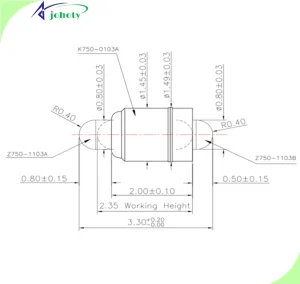
Can the IP67 double ended pogo pin connector work stably in harsh environments?
Yes, the double ended pogo pin connector can be used in automotive radar, drone control modules, and wearable devices. In addition to transmitting signals, it must also resist liquids, dust, salt spray, etc. Johoty’s double ended pogo pin connector performs as follows in IP67 testing:
- In a simulated environment with a water immersion depth of 1m and a duration of 30 minutes, the contact resistance increases by less than 2mΩ.
- After 96 hours of salt spray testing, there was no corrosive precipitation, and the contact point remained conductive.
- The fully enclosed shell design allows for operation under thermal conductive silicone encapsulation without the need for additional heat dissipation structures.
Outdoor base station antenna modules, high-altitude camera modules, and medical catheter modules often operate under high humidity and pressure. They use Johoty’s double ended pogo pin connector in their precision system.
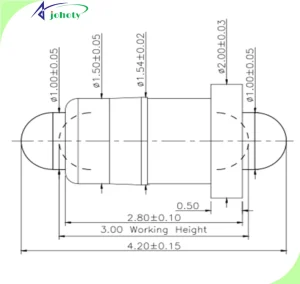
How to define micrometer level contact consistency of double ended pogo pin connectors in high-precision manufacturing?
The stable transmission of high-speed signals relies not only on design, but also on manufacturing consistency. Johoty adopts fully automated CNC turning + micrometer-level precision polishing + microscopic imaging detection. We can achieve the following indicators:
- Diameter error of each pogo pin is less than ±2μm.
- Diameter deviation of ball head at the connection end is less than ± 5 μ m.
- Error rate of spring force is less than 3%.
- Consistency RSD of each shipment is less than 1.8%.
In multi-point docking connections, there is no need for additional manual adjustment or repositioning. It can ensure consistent crimping of board to board connections throughout the entire area. It is very advantageous for connecting 8-16 channels simultaneously in high-speed data acquisition modules. Johotyde’s manufacturing accuracy can directly improve the reliability and debugging efficiency of customer systems.
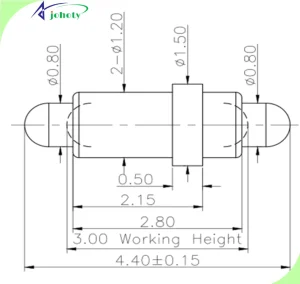
Client feedback on double ended pogo pin connector
To verify the actual performance of the connector, we have compiled real usage feedback from four types of European and American customers:
German automotive radar supplier: After using Johoty customized double ended pogo pin connector, the failure rate decreased from 1.3% to 0.05%. No damage was found during the 1000 hour vibration test.
Nordic Medical Equipment R&D Laboratory: Continuous operation for 120 days without insertion loss in IP67+high-frequency acquisition card structure.
US server ODM: Using double ended pogo pin connector saves 14% PCB space. Simplify the heat dissipation structure, and extend the MTBF of the system by about 18%.
French Satellite Electronic Engineering Center: After deployment in the 60GHz phased array antenna module, reduce the beam offset error by about 0.2°.
These actual data validate the technical stability of the double ended pogo pin connector. It becomes from an optional component to a core connecting element.
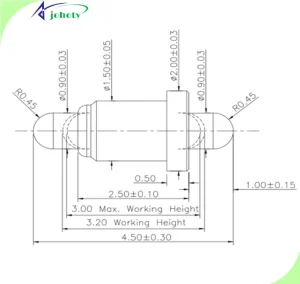
Why will the double ended pogo pin connector become a pivot for the evolution of standard interfaces?
PCIe Gen6, USB4, Serdes, QSPI are gradually developing towards low power consumption, high bandwidth, and modularity. Connectors will no longer be just sockets, but an important link in high-speed system links. The reason why the double ended pogo pin connector is in line with future standard interface trends is that it naturally has:
- Customizable layout (flexible and adjustable pitch sizes: 1.00mm, 1.27mm, 2.50mm, 2.54mm, etc.).
- Modular stacking capability (supporting socket style structure).
- High durability and environmental adaptability.
- Suitable for new material PCBs (such as LCP, BT, ceramic substrates), etc.
In the future, traditional copper pillar structures are likely to be phased out in EMI sensitive areas. You can dominate the true precision connection by this miniature double ended pogo pin connector.
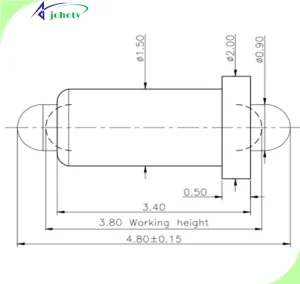
Conclusion: Every reliable connection is the cornerstone of system security
Double ended pogo pin connector is an engineering solution supported by data and practical validation. On every high-frequency PCB board and every precision connection, Johoty can manufacture and customize for you at the micrometer level. Build a reliable, stable, and low-power signal channel for you.
If you are facing:
- A communication module that is compact in space but requires stable frequency.
- Frequent plugging and unplugging in embedded systems leads to insufficient lifespan of connectors.
- Can’t control contact resistance in high-speed signal systems.
- Challenges in PCB system design with low profile but high reliability requirements.
Please contact Johoty immediately. We provide structural design, material selection, thermal/EMC collaborative design, and mass manufacturing. Build connectivity guarantees for your system performance. Contact Johoty immediately to customize your next-generation double ended pogo pin connector solution.